When Your AC Fails on the First 95-Degree Day
It’s 10:30 AM on a Tuesday morning in late May, and you’ve just set your thermostat to 72°F for the first time this season. Burbank summers are short, hot, and arid, with temperatures typically reaching 88°F and occasionally exceeding 97°F. You hear the outdoor unit click on, then…nothing. Warm air continues pumping through your vents. By noon, your living room hits 82°F. By 2 PM, you’re calling emergency AC Repair in Burbank, only to learn that every HVAC contractor in the San Fernando Valley is booked solid for three days. That’s when you realize: spring maintenance isn’t optional in Southern California—it’s survival preparation.
📋 In This Guide
💰 Typical Spring Maintenance & Repair Cost Ranges
- Professional AC Tune-Up: $75–$200
- Capacitor Replacement: $200–$500
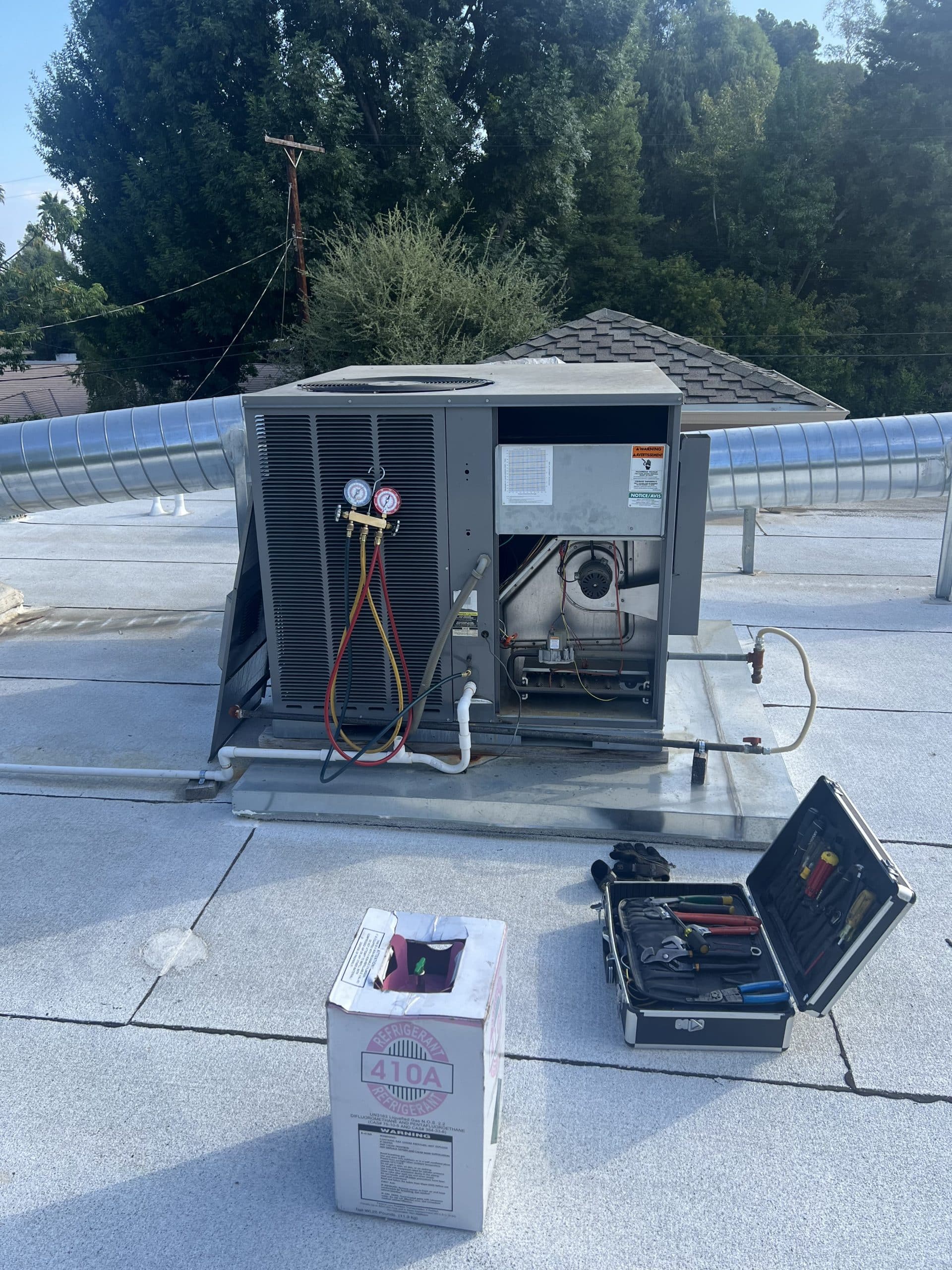
- Refrigerant Recharge (R-410A): $100–$320
- Emergency Service Call (Peak Season): $150–$200
Step 1: Schedule Your Professional Tune-Up Before April 15
The single most important action on this checklist isn’t something you do yourself—it’s booking your professional tune-up early. HVAC companies are busiest during summer, so scheduling maintenance in spring is ideal. In Burbank, where temperatures often soar above 90°F during hot, dry summers, that narrow window between mild March weather and intense May heat is critical.
Call ACE Appliance Heating and Cooling at (818) 939-4882 in early March. Technicians can still move appointments around, parts are readily available, and you won’t pay emergency premiums. Wait until mid-May, and you’ll compete with homeowners whose systems already failed.
A comprehensive professional inspection covers what DIY maintenance cannot: refrigerant pressure testing (requires EPA certification), electrical continuity checks on capacitors and contactors, amperage draws on compressor motors, and condensate drain clearing with specialized tools. Technicians inspect your entire system to identify faulty or failing parts before they strand you during a heat wave.
What to Expect During Your Tune-Up
Your technician will spend 60–90 minutes on a thorough inspection. They’ll clean both evaporator coils (inside your air handler) and condenser coils (in the outdoor unit), check thermostat calibration, measure airflow across registers, inspect ductwork connections for leaks, test safety controls, and verify proper system cycling. Modern systems from Carrier, Trane, and Lennox with variable-speed compressors require diagnostic software—another reason professional service matters.
Step 2: Replace Your Air Filter (Do This in Early March)
This is the only maintenance task you should complete before your professional appointment. A clogged filter forces your system to work harder, and a clogged air filter makes it harder for clean air to circulate through your home, reducing efficiency significantly.
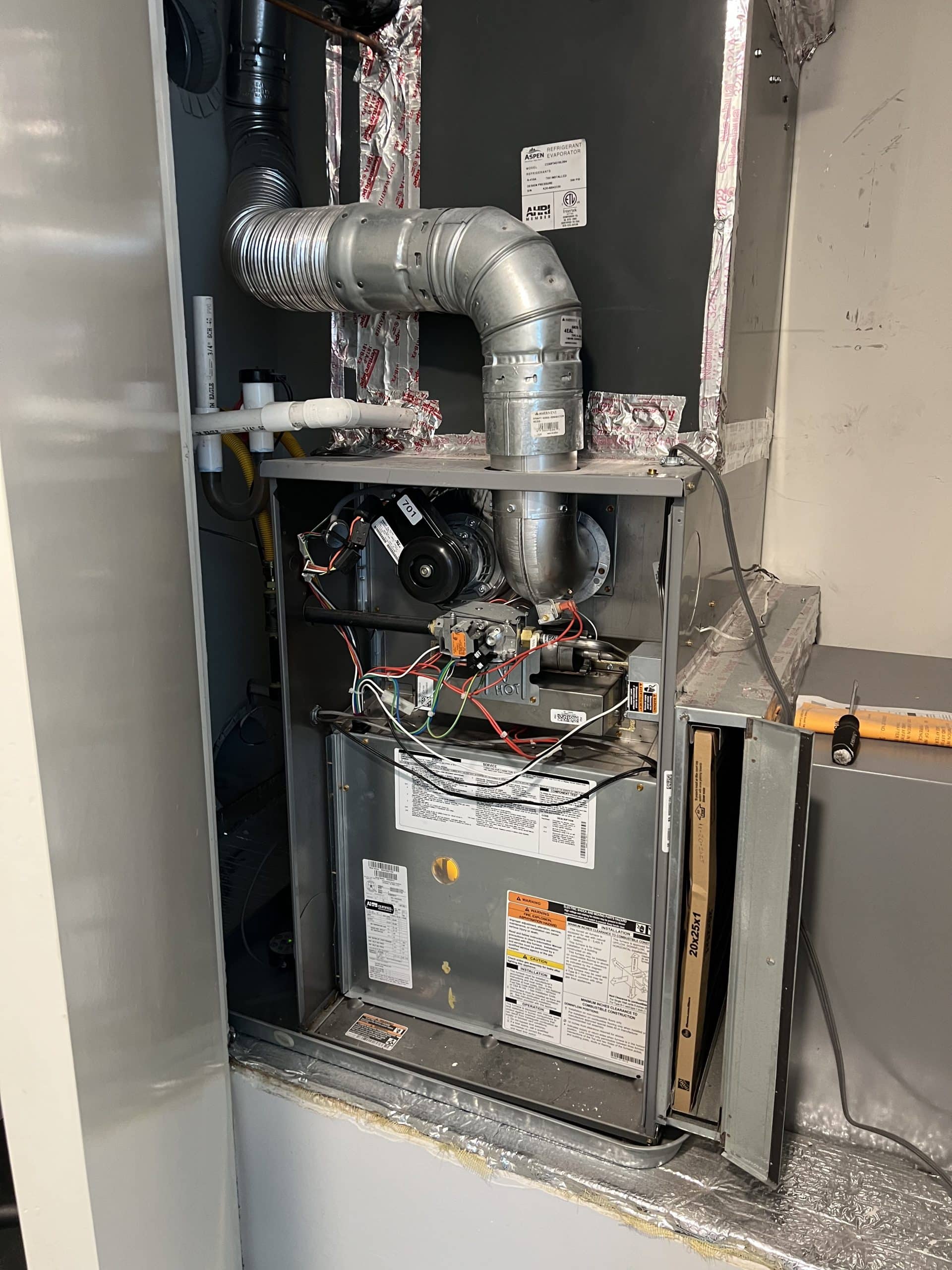
Locate your filter—typically in a return air grille or inside your furnace cabinet. Check the size printed on the frame (common sizes: 16x20x1, 20x25x1). Purchase a filter with a MERV rating between 8 and 11 for Burbank’s dry climate. Higher ratings (MERV 13+) restrict airflow in older systems unless specifically designed for them.
Remove the old filter and note the airflow direction arrow. Install the new filter with arrows pointing toward the blower motor. Set a phone reminder to check it again in 60 days—Burbank’s dusty conditions during Santa Ana wind events can clog filters faster than the standard 90-day replacement interval.
Step 3: Clear Debris From Your Outdoor Condenser Unit
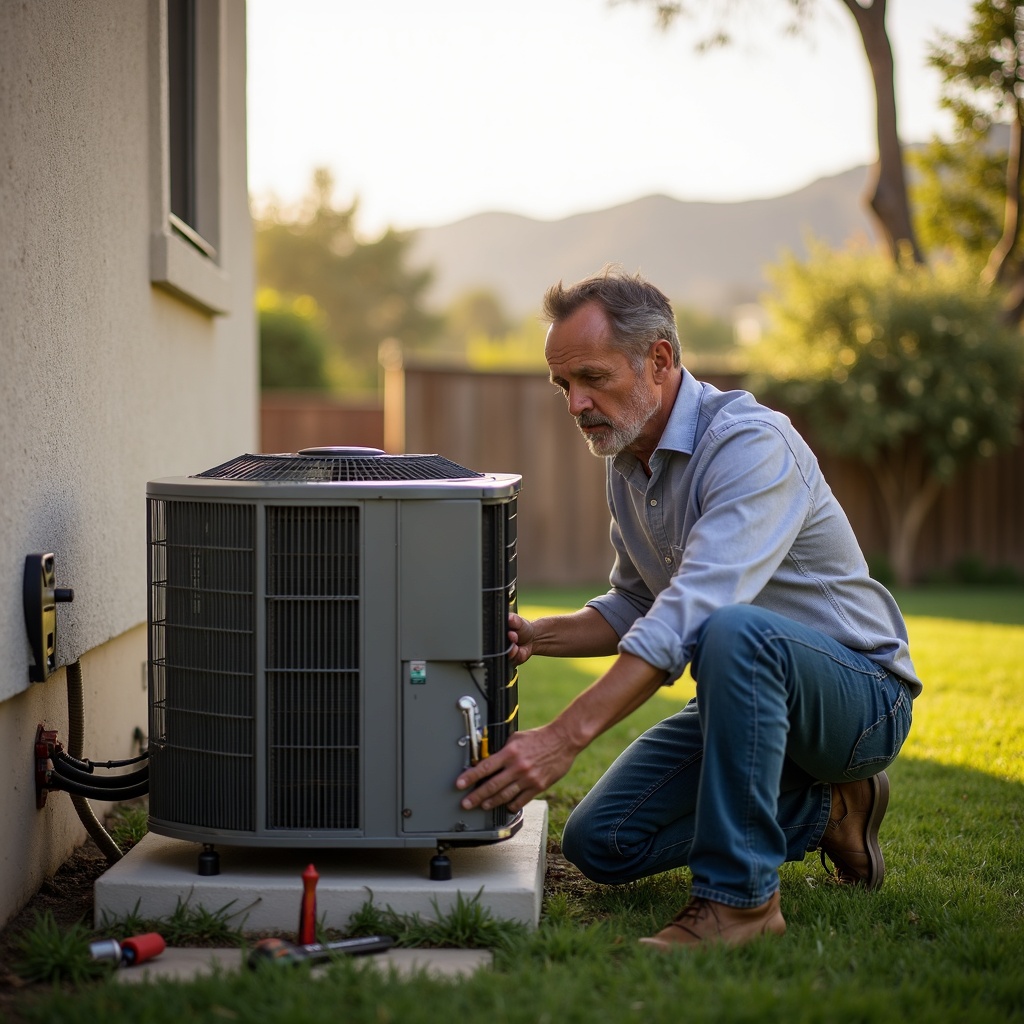
Walk outside to your condenser unit. You’ll likely find cottonwood seeds, dead leaves, grass clippings, and dust accumulated in the fins and around the base. This debris acts as insulation, preventing heat dissipation and forcing your compressor to run longer cycles.
Turn off power at the disconnect box (mounted on the wall near the unit). Remove the top grille by unscrewing the fasteners. Clear leaves and debris from inside the unit. Use a garden hose with a spray nozzle to rinse the condenser fins from the inside out—never spray from outside in, as this pushes debris deeper into the fins. Straighten any bent fins with a fin comb (available at hardware stores for $8–12).
Trim vegetation back at least 24 inches on all sides. Your condenser needs unrestricted airflow to function efficiently. If your unit sits in direct sun, consider installing a shade structure—but never restrict airflow from above.
Check for Refrigerant Leaks
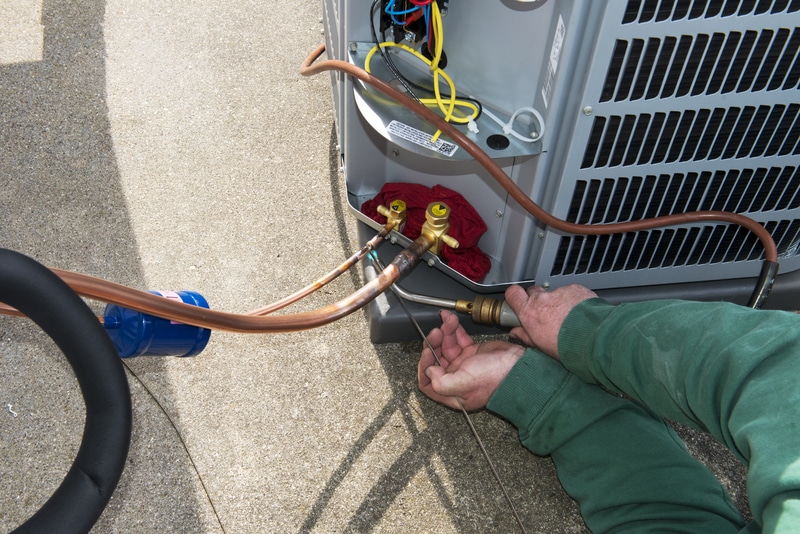
While you’re outside, inspect refrigerant lines running from the condenser to your home. Look for oily residue, which indicates a slow leak. Check for ice formation on the lines—another leak symptom. If you spot either, note it for your technician. The cost depends on your refrigerant type and amount needed, with older R-22 systems costing more due to phase-out regulations.
Step 4: Inspect Interior Vents and Test Airflow
Walk through every room in your home. Remove vent covers and vacuum accumulated dust from the first six inches of each duct. Ensure no vents are blocked by furniture, curtains, or storage boxes—a common issue in Media District condos and Burbank Hills homes where space is tight.
Turn your system to cooling mode and set the temperature 5°F below room temperature. Place your hand in front of each supply register. Airflow should feel strong and consistent. Weak airflow in specific rooms suggests duct leaks, undersized ducts, or damper issues that require professional Ductwork Repair, Installation & Maintenance Services.
Check return air grilles (usually larger vents without dampers). These should pull air strongly. Hold a tissue near the grille—it should be drawn against the opening. Inadequate return air causes system imbalance and reduces efficiency.
Step 5: Test Your Thermostat and Upgrade If Necessary
Set your thermostat to cooling mode and lower the temperature setting. Your system should start within 30–60 seconds. If it doesn’t, check batteries (for battery-powered models) or verify power at your circuit breaker panel.
Observe temperature accuracy by placing a separate thermometer next to your thermostat. If readings differ by more than 2°F, your thermostat needs recalibration or replacement. Thermostats older than 10 years often develop drift—they display one temperature but trigger at another.
Consider upgrading to a programmable or smart thermostat. Annual tune-ups typically cost $120–$200 but can lower energy bills by up to 15%—smart thermostats add another 10–15% savings through optimized scheduling and learning algorithms. Models compatible with Burbank’s common split-system configurations include the Honeywell T6 Pro, Ecobee SmartThermostat, and Nest Learning Thermostat.
| Maintenance Type | DIY Tasks | Professional Tasks |
|---|---|---|
| Filter Maintenance | Replace every 60–90 days | Inspect housing for leaks |
| Outdoor Unit | Clear debris, rinse fins | Deep coil cleaning, refrigerant check |
| Airflow Testing | Check vent blockages | Measure CFM, test duct integrity |
| Electrical Components | None (safety risk) | Test capacitors, contactors, wiring |
| Refrigerant System | None (EPA certification required) | Pressure test, leak detection, recharge |
How Spring Maintenance Protects Your Investment and Budget
Burbank’s climate creates unique stress on HVAC systems. An undersized system will struggle during peak summer days, running continuously without adequately cooling your home. But even properly sized systems wear down when forced to operate in hot, dry summers with temperatures reaching the mid-90s (F) and occasional heat waves for months on end.
Extended operation during summer months accelerates wear on compressors, fan motors, and electrical components, with capacitors particularly susceptible to failure. A $180 spring tune-up that catches a failing capacitor saves you from a $1,500 compressor replacement three months later. That’s the financial logic behind preventive maintenance.
Energy savings matter too. Over time, parts wear out and leaving them unrepaired leads to energy inefficiency—a clogged filter makes it harder for air to circulate, causing your system to run longer to achieve the set temperature, but regular maintenance keeps your system as efficient as possible. In practical terms, that means 15–20% lower cooling costs from June through September. For an average Burbank household spending $380–520 monthly on summer cooling, that’s $60–130 in monthly savings.
When to Call for Emergency Service
Even with perfect spring maintenance, watch for these warning signs that require immediate professional attention: refrigerant leaks (oily residue or ice on lines), burning smells from vents or outdoor unit, repeated circuit breaker trips, grinding or screeching noises from the compressor, or system short-cycling (turning on and off every few minutes). These indicate failures that worsen rapidly and can damage other components.
Don’t attempt DIY repairs on refrigerant systems, electrical components, or compressors. Modern AC systems operate at high voltage and contain pressurized refrigerant—both serious safety hazards without proper training and tools. For reliable HVAC services in Burbank, contact licensed professionals who carry proper insurance and certifications.
Get Your System Summer-Ready Now
Spring HVAC maintenance in Burbank isn’t about following generic checklists—it’s about preparing for the specific demands of a climate where summer temperatures regularly exceed 90°F and can dip into the 40s during cool winters. Your system needs to handle that range reliably for 10–15 years, which only happens with consistent preventive care.
Complete the DIY tasks on this checklist in early March: replace your filter, clear outdoor unit debris, inspect vents, and test your thermostat. Then schedule your professional tune-up for mid-March through early April. That timing ensures your system is optimized before the first heat wave hits Magnolia Park, the Media District, Downtown Burbank, or Burbank Hills.
ACE Appliance Heating and Cooling has served Burbank homeowners for years, providing expert maintenance, reliable repairs, and honest advice on system replacement when necessary. Whether you need routine spring maintenance or emergency cooling system repair, our EPA-certified technicians bring the diagnostic equipment and technical knowledge that modern HVAC systems require. Call (818) 939-4882 today to schedule your spring tune-up and protect your home from summer breakdowns.
Get Your Free Quote Today