What Happens When Burbank Homeowners Ignore Wildfire HVAC Protection
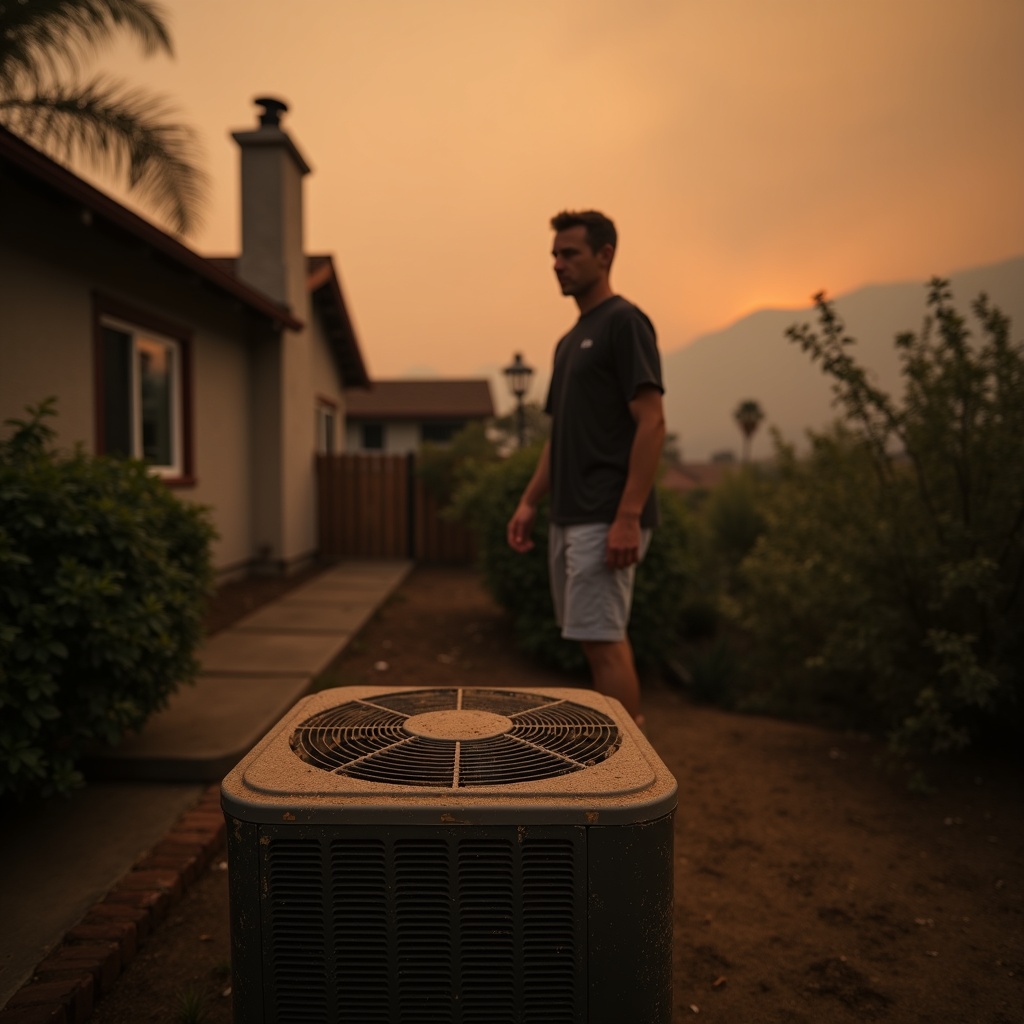
Every year, smoke from wildfires causes severe air quality impacts across Southern California, yet many Burbank residents don’t realize their air conditioning system is actively pulling that toxic smoke indoors. When January 2025’s Palisades and Eaton fires forced evacuations and daily PM2.5 concentrations at downtown LA monitoring stations reached 101.7 μg/m³, unprepared HVAC systems became contamination highways—cycling smoke, ash, and microscopic particles into living rooms, bedrooms, and nurseries. The cost of ignoring wildfire smoke HVAC Burbank protection goes far beyond air quality: clogged filters force blowers to work harder, shortening system lifespan and potentially causing compressor motor problems. Homeowners who waited until red-flag warnings appeared spent thousands on emergency AC Repair in Burbank when preventable damage became catastrophic failure.
📋 In This Guide
💰 Typical Wildfire-Related HVAC Costs
- MERV 13 filter (single): $25–$60
- Emergency coil cleaning: $150–$300
- Blower motor replacement (smoke damage): $400–$800
- Whole-home air purifier installation: $1,000–$4,000
- Post-fire ductwork cleaning: $270–$500
How Wildfire Smoke Damages Your Burbank HVAC System
Wildfire smoke isn’t just unpleasant—it’s mechanically destructive. Fine particulate matter (PM2.5) is small enough to get deep into the lungs and the tiniest ultrafine particles can pass directly into the bloodstream, but those same particles also infiltrate HVAC components with surgical precision. When your system runs during smoke events, fine ash and dust clog filters rapidly, forcing the system to work harder just to move air and putting extra stress on parts like the motor and fan. Standard fiberglass filters rated MERV 1–4 offer virtually no protection—they’re designed for lint, not microscopic combustion byproducts.
The invisible damage accumulates over time. Ductwork becomes coated with smoke, soot, and ash that stick to interior surfaces, creating reservoirs of contamination that continue off-gassing volatile organic compounds for weeks after the air quality index returns to normal. Indoor PM2.5 and PM10 concentrations in smoke-affected homes showed indoor-to-outdoor ratios greater than 1, compared to typical ratios of 0.45–0.8 in residences, indicating persistent indoor particle reservoirs. In Burbank’s foothill neighborhoods like Burbank Hills and Rancho District, where elevation increases exposure to drifting smoke plumes, the compounding effect can reduce cooling efficiency by 20–30% before homeowners notice reduced airflow.
Component-Specific Vulnerabilities
Evaporator coils—responsible for heat exchange—accumulate particulate buildup that acts as insulation, preventing proper refrigerant temperature transfer. Evaporator coils and blowers are targets for smoke but can be difficult to clean if they have to be removed for better access. Condenser units outside your home face double exposure: airborne ash settles on coils while strong Santa Ana winds during fire season drive debris into the cabinet. Modern variable-speed compressors in systems like Carrier Infinity or Trane XR models include sensitive electronic controls that fail faster when exposed to corrosive smoke residue.
Emergency Air Conditioning Repair Near Me: Immediate Protection Steps
When the South Coast Air Quality Management District issues a smoke advisory for Burbank, your first defensive action should be upgrading to a MERV 13 rating filter, or as high a rating as your system fan and filter slot can accommodate. Cost for a single MERV 13 filter typically ranges from about $12 to $80, with most residential replacements landing in the $25–$60 band. This investment captures up to 90–95% of wildfire smoke particles—a dramatic improvement over standard options.
Switch your thermostat to “fan on” mode rather than “auto.” Ensuring continuous HVAC fan operation during wildfire events is crucial for keeping air filtered and preventing stagnant smoke pockets indoors, with experts recommending running fans at low speeds even when heating or cooling is not needed. For homeowners seeking affordable HVAC repair near me during emergencies, ACE Appliance Heating and Cooling provides rapid HVAC services in Burbank including same-day filter upgrades and system assessments.
Creating Positive Pressure
Seal air leaks with caulking and weather stripping, add door sweeps and insulate attic access points, then create slight positive pressure in your home by drawing in filtered outdoor air using mechanical ventilation systems. This prevents contaminated air from being pulled through cracks around windows, door gaps, and penetrations in the building envelope. In Burbank’s older housing stock—particularly in Magnolia Park and the Media District—homes built before modern air-sealing standards require extra attention to basement rim joists, attic hatches, and recessed lighting fixtures.
| Protection Strategy | Effectiveness Against Smoke | Implementation Cost |
|---|---|---|
| Standard MERV 8 filter | Minimal (captures large dust only) | $15–$30 |
| MERV 13 high-efficiency filter | High (90–95% of PM2.5 particles) | $25–$60 |
| Portable HEPA air purifier | Very high (single room coverage) | $100–$1,000 |
| Whole-home HEPA system | Maximum (hospital-grade filtration) | $2,000–$5,000 installed |
Post-Wildfire System Recovery and Inspection
After smoke clears and the air quality index returns to healthy ranges, change filters immediately after smoke exposure, then replace filters two to three times more often than usual for the next several months to maintain indoor air quality. Don’t assume your system escaped damage just because it continues running. Preventative maintenance is highly recommended after wildfire contamination, as fire dust and debris can damage system components over time, with strained blower motors or restricted coils burning out faster than normal.
Schedule a comprehensive inspection that includes condenser coil cleaning, evaporator coil assessment, blower wheel examination, and refrigerant pressure testing. Approximately 48% of HVAC systems inspected for smoke and fire damage in 2019 could be returned to pre-loss condition with a repair or were in proper working condition at the time of inspection—meaning professional evaluation often reveals less expensive solutions than full replacement. For Burbank residents near Hollywood Burbank Airport or Warner Bros. Studios, commercial-grade exposure from regional fires may warrant Ductwork Repair, Installation & Maintenance Services to address contamination that standard filter changes can’t resolve.
When to Consider Full Replacement
If your system is already 10–15 years old and suffered significant smoke exposure, replacement may be more cost-effective than repair. The industry threshold suggests replacement when repair costs exceed 50% of new equipment value. Modern systems offer dramatically improved filtration compatibility—variable-speed air handlers in current Lennox XC or American Standard models accommodate MERV 13–16 filters without the airflow restrictions that plagued older fixed-speed units. Consult Should You Repair or Replace Your HVAC System? A Strategic Guide for Encino Homeowners for decision frameworks that apply equally to Burbank properties.
Whole-Home Air Purification for Long-Term Protection
A whole-house air purifier costs $400 to $4,000 depending on the type of filtration system, efficiency rating, and labor to install, with HEPA filter systems costing $1,000 to $4,000 with installation and being the most effective at removing dust and allergens from the air. For Burbank homeowners in wildfire-prone areas, this represents a permanent solution rather than seasonal emergency measures.
Electronic air cleaners use electrostatic precipitation to trap ultrafine particles without the airflow resistance of dense mechanical filters. UV light systems neutralize biological contaminants including mold spores and bacteria that proliferate in smoke-damaged ductwork. HEPA in-duct units provide MERV 17+ filters that deliver hospital-grade air quality—ideal for wildfire-prone homes. The optimal configuration often combines technologies: a MERV 13 pleated pre-filter captures larger particles, followed by activated carbon media that adsorbs volatile organic compounds and smoke odors, with a final HEPA stage removing submicron particulates.
Installation requires professional assessment of your existing system’s air-handling capacity. Older HVAC systems may not support higher-MERV filters or advanced purifiers without adjustments, potentially necessitating blower motor upgrades or static pressure modifications. A qualified technician evaluates duct sizing, return air pathways, and fan curves to ensure new filtration doesn’t create negative pressure that draws unconditioned air through building envelope gaps—defeating the entire purpose of upgraded protection.
ACE Appliance Heating and Cooling serves Burbank, Glendale, La Cañada Flintridge, and surrounding communities with comprehensive wildfire HVAC protection solutions. Our technicians conduct whole-system evaluations, recommend appropriate filtration upgrades, seal duct leakage points, and install whole-home purification systems tailored to your property’s specific vulnerabilities. Don’t wait for the next red-flag warning to discover your system can’t protect your family. Call (818) 939-4882 today to schedule a wildfire preparedness assessment and breathe easier knowing your home is protected year-round.
Get Your Free Quote Today