How Much You’ll Actually Spend on AC Installation
The choice between central air conditioning and mini-split systems comes down to one reality for most Encino homeowners: the upfront investment you’re comfortable making and the long-term value you expect from your cooling system. Central AC replacement costs $5,000 to $8,300 on average for standard efficiency units, while costs for both the system and labor range from $6,465 to $11,877. Mini split heat pump installation costs usually start at around $2,000 for a single-zone system, ranging from around $2,000 to $10,000 or more for multiple indoor units. The gap between these figures reflects fundamental differences in how each system delivers cooling to your home—and understanding these distinctions helps you avoid overspending on features you don’t need or underspending on capacity your home requires.
📋 In This Guide
💰 Typical Installation Cost Ranges
- Central AC (3-ton system): $5,000–$8,300
- Single-zone mini-split: $2,000–$6,000
- Two-zone mini-split: $4,800–$10,800
- Ductwork installation (if needed): $2,400–$6,600
- Electrical upgrades: $500–$2,000
Central Air Conditioning: The Traditional Whole-Home Solution
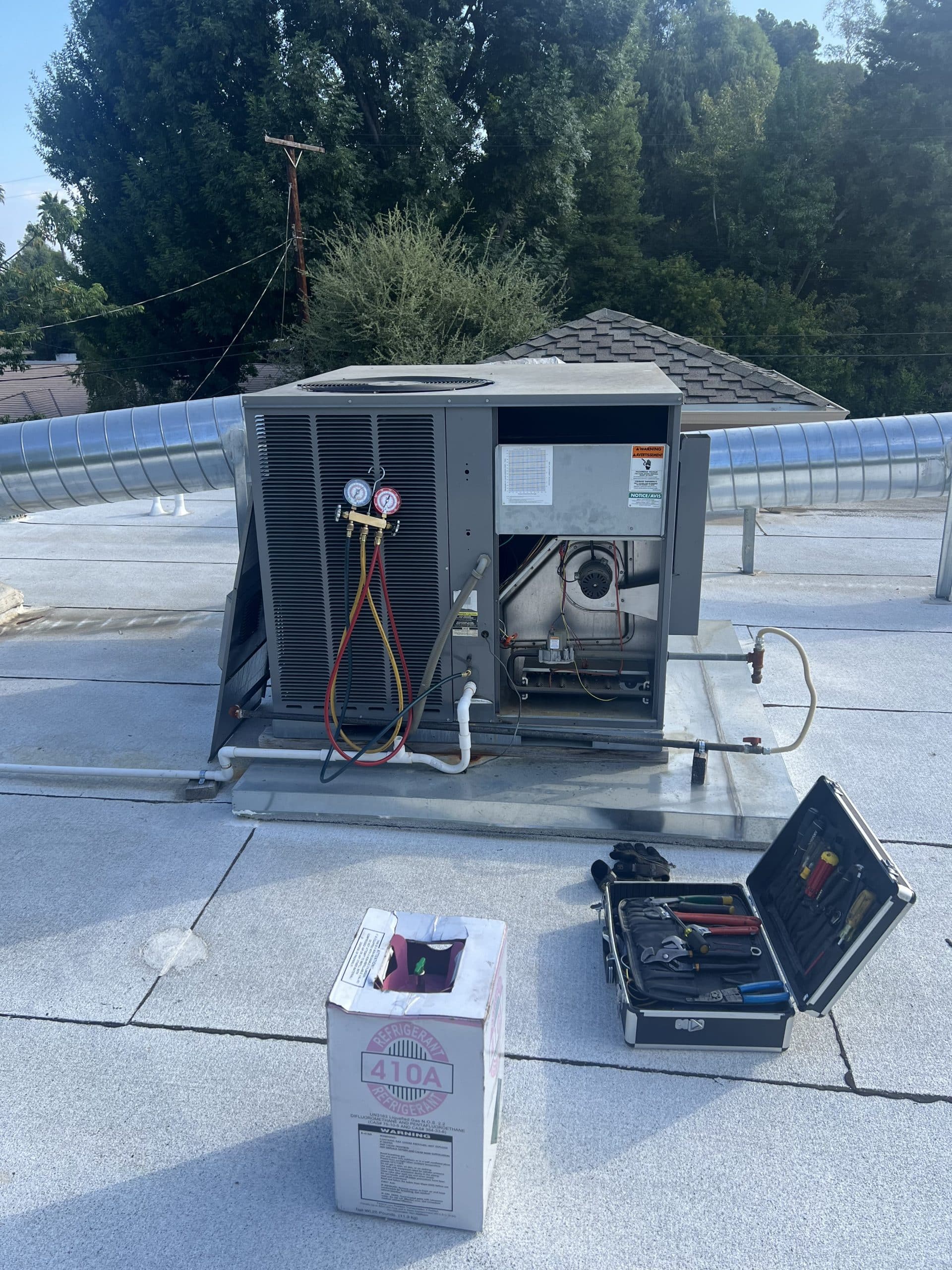
Central air conditioning remains the most common cooling solution in Encino neighborhoods like Royal Oaks and Amestoy Estates, primarily because it leverages existing ductwork infrastructure that many homes already have from their heating systems. The outdoor condenser unit connects to an indoor evaporator coil, distributing cooled air throughout your home via a network of ducts hidden in walls, ceilings, and crawl spaces. Central AC systems cost between $5,000 and $12,000 for the typical home, using an outdoor condenser to move refrigerant and an indoor air handler that distributes cooled air through ductwork, making them highly efficient for whole-home cooling in homes with furnaces already fitted with ductwork.
For Encino’s housing stock—where median home values reach $1,200,000 and properties often feature 2,000+ square feet—central AC provides consistent temperature control across multiple rooms simultaneously. An HVAC services in Encino professional can typically install a replacement central AC system in 8 to 14 hours for homes with existing ductwork, though complete system installation with ductwork modifications can take 2 to 3 days. The installation complexity increases significantly if your home lacks ductwork entirely, adding thousands to the project cost.
What Determines Central AC Installation Costs
System capacity represents the primary cost driver for central air installations. Homes need about 45 BTUs per square foot of living space, and a professional should determine the final size using a Manual J calculation, which accounts for factors like climate, insulation, ceiling height, and sun exposure. In Encino’s warm San Fernando Valley climate, proper sizing becomes crucial—an undersized system runs constantly during summer peaks, while an oversized system cycles on and off inefficiently, failing to control humidity properly.
Efficiency ratings significantly impact both equipment cost and long-term operating expenses. SEER2 cooling efficiency ratings for central AC units range from up to 13.4 to up to 23.6 SEER2. Higher-efficiency models command premium prices but deliver substantial energy savings in California’s expensive electricity market, where rates frequently exceed $0.20 per kWh. An hvac contractor in Encino can calculate your specific payback period based on your home’s cooling load and typical usage patterns.
When Central AC Makes the Most Sense
Central air conditioning excels in specific scenarios that align with many Encino properties. Homes with existing, well-maintained ductwork avoid the $2,400–$6,600 expense of new duct installation, making central AC the most cost-effective whole-home cooling option. Properties where consistent temperature throughout all rooms matters—particularly homes with open floor plans or where family members have similar comfort preferences—benefit from central AC’s uniform distribution.
The system also integrates seamlessly with smart thermostats and whole-home air quality systems, creating a unified HVAC ecosystem. For homeowners planning to remain in their property long-term, central AC’s proven reliability and straightforward maintenance make it an attractive investment that typically adds to resale value in Encino’s competitive real estate market.
Mini-Split Systems: Zone-Controlled Flexibility
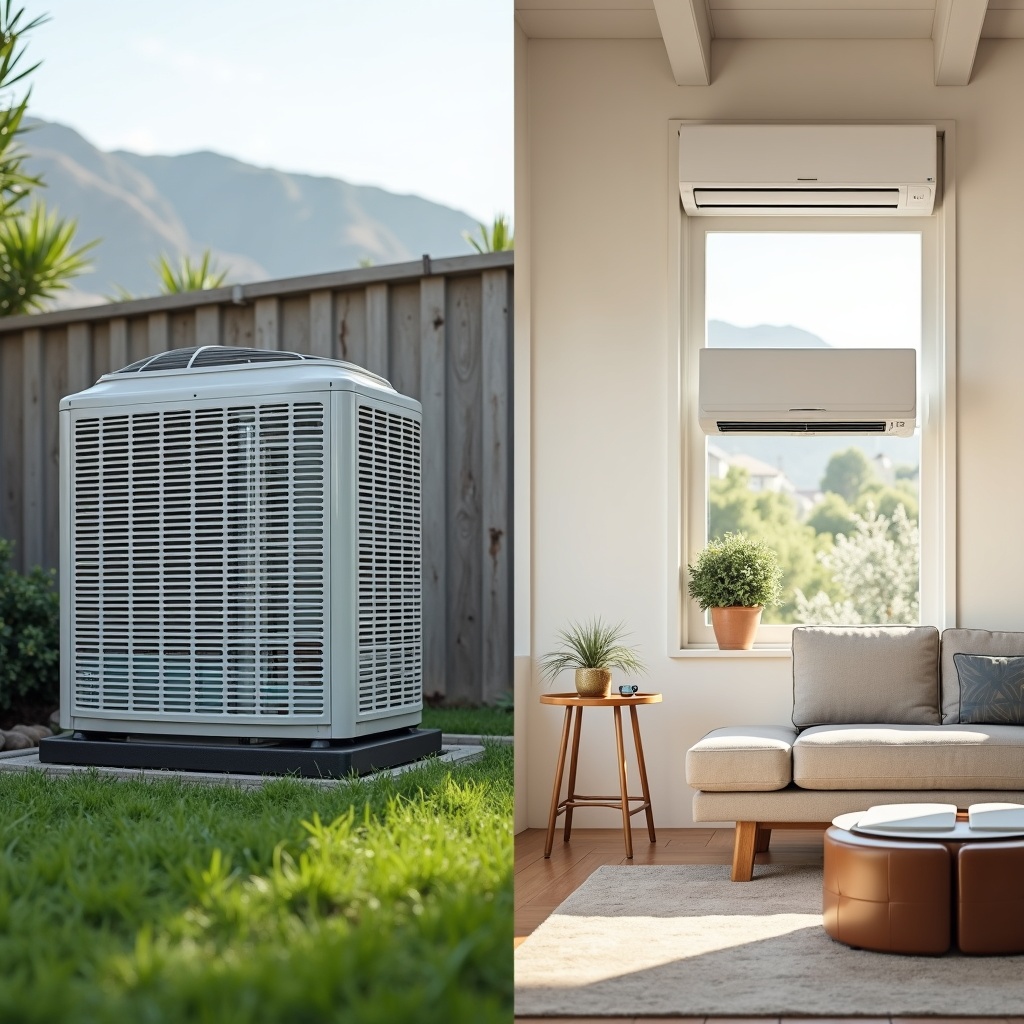
Ductless mini-split systems represent a fundamentally different approach to home cooling. Instead of distributing cooled air through ductwork, mini-splits place individual air handlers directly in the rooms you want to cool, connected to an outdoor compressor unit via refrigerant lines that require only a three-inch hole through the wall. A single-zone mini-split system costs $2,800 to $4,500 for equipment, with complete installation running $4,200 to $6,800, working well for studio apartments, single bedrooms, or converted spaces where running ductwork would be impractical or prohibitively expensive.
For Encino homeowners, mini-splits solve specific challenges that central AC cannot address efficiently. Room additions without duct access, converted garages, home offices requiring independent climate control, and older homes without existing ductwork all become viable candidates for reliable air conditioning services through mini-split installation. The technology has gained significant traction in California due to exceptional efficiency ratings and precise temperature control capabilities.
Multi-Zone Systems and Capacity Planning
Two-zone systems cost $4,800 to $7,500 for equipment, with total installation ranging from $7,200 to $10,800, suiting smaller homes, duplexes, or situations where you want independent temperature control for sleeping areas versus living spaces. Each additional zone increases both equipment and labor costs but provides room-by-room control that central AC cannot match. In Encino’s climate, this means cooling bedrooms at night while allowing living areas to warm up, or maintaining a comfortable home office temperature without conditioning the entire house.
Installation complexity varies considerably based on placement requirements. Mini-split installation costs vary significantly based on installation complexity, with wall-mounted indoor units installed on exterior walls representing the simplest scenario, while running refrigerant lines through attics, across longer distances, or mounting units on interior walls requiring longer line sets adds $400 to $1,200 per zone. Homes in Encino Hills with multi-level construction or complex layouts may encounter these additional costs, which a qualified HVAC contractor should identify during the initial assessment.
Efficiency Advantages of Mini-Split Technology
Mini-splits consistently deliver higher efficiency ratings than comparable central AC systems. A Carrier Infinity system mini split air conditioner offers a published rating of up to 28.5 SEER2 cooling efficiency compared to a top-of-the-line Carrier Infinity split system air conditioner that provides up to 24 SEER2 cooling efficiency, with ductless mini split units often achieving higher SEER2 ratings than central AC units and heat pumps. This efficiency gap exists because each indoor unit delivers cooled or heated air directly into the room, so you don’t have energy lost traveling through ductwork.
In practical terms for Encino homeowners, this efficiency translates to lower monthly utility bills despite California’s high electricity rates. The ability to turn off units in unoccupied rooms further reduces energy consumption—a feature central AC simply cannot replicate without expensive zoning systems that still rely on potentially leaky ductwork.
Side-by-Side Comparison: Which System Fits Your Needs
| Factor | Central AC | Mini-Split |
|---|---|---|
| Installation Cost | $5,000–$8,300 (with existing ducts) | $2,000–$10,800 (1-2 zones) |
| Efficiency Range | 13.4–23.6 SEER2 | 20–28.5+ SEER2 |
| Best For | Whole-home cooling, existing ductwork | Zone control, no ducts, room additions |
| Installation Time | 8–14 hours (2–3 days with new ducts) | 4–8 hours per zone |
| Aesthetic Impact | Hidden components, outdoor unit only | Visible wall units in each room |
| Zone Control | Limited (requires expensive zoning) | Independent control per room |
Hidden Costs and Additional Considerations
Both central AC and mini-split installations involve expenses beyond the basic equipment and labor figures that contractors initially quote. Understanding these potential additions helps you budget accurately and avoid surprises during installation.
Electrical service upgrades represent a common additional expense, particularly in older Encino homes built before modern air conditioning became standard. New electrical circuits range from $100 to $150, though more extensive panel upgrades can reach $500–$2,000 depending on your home’s electrical capacity. Mini-splits typically require less electrical work than central AC systems, as each indoor unit draws modest power compared to a central air handler’s substantial electrical demand.
Permit requirements and inspection fees vary by project scope but shouldn’t be overlooked. Permits for AC replacement cost $100 to $250, while permits for new AC installations with ductwork cost anywhere from $250 to $1,500. Your AC repair in Encino contractor should handle permit acquisition and coordinate inspections, ensuring your installation meets California Title 24 energy efficiency standards and local building codes.
Ductwork condition critically impacts central AC costs but doesn’t affect mini-split installations. If you’re considering central AC, have your ducts professionally inspected before committing to the system. Ductwork replacement costs $1,400 to $5,600, while installing new ductwork costs $2,400 to $6,600. Homes with leaky, poorly insulated, or undersized ducts may find mini-splits more cost-effective despite higher per-zone equipment costs, as they eliminate ductwork entirely.
Making the Right Choice for Your Encino Home
Your home’s specific characteristics should drive your decision between central AC and mini-split systems. Properties in neighborhoods like Encino Hills with existing ductwork in good condition typically benefit from central AC’s lower installation cost and proven whole-home performance. If your family maintains similar temperature preferences throughout the home and you value the clean aesthetic of hidden ductwork, central AC aligns with these priorities.
Conversely, mini-splits excel when ductwork doesn’t exist or would be prohibitively expensive to install. Room additions, converted spaces, multi-generational homes where different family members prefer different temperatures, and properties where you want to cool only occupied spaces all favor mini-split technology. The higher efficiency ratings deliver meaningful savings in Encino’s climate, where air conditioning runs for extended periods during summer months.
Consider your long-term plans for the property as well. With a median home value of $1,200,000, Encino homeowners often view HVAC systems as property investments rather than mere cooling equipment. Both central AC and mini-splits add value when properly installed and maintained, though buyer preferences vary. Some buyers expect whole-home central AC and view it as a standard feature, while others appreciate mini-splits’ flexibility and efficiency advantages.
Energy costs deserve careful analysis in your decision-making process. California’s electricity rates make efficiency ratings financially significant rather than abstract numbers on specification sheets. A mini-split system rated at 25 SEER2 uses substantially less energy than a 15 SEER2 central AC system to deliver the same cooling output. Over a 15-year equipment lifespan, these savings can offset the higher upfront cost of multi-zone mini-split installations, particularly if you actively use zone control features to avoid cooling unoccupied spaces.
Working with Professional Installation Services
Regardless of which system you choose, professional installation determines whether your equipment delivers its rated efficiency and reliability. DIY installation isn’t viable for either technology—both require refrigerant handling, electrical work, and technical knowledge that California law restricts to licensed professionals. DIY installation is not recommended because mini splits require specialized refrigerant handling, vacuuming, and leak testing that only licensed professionals can safely perform.
When evaluating contractors, verify their experience with your chosen system type. Central AC installation requires different expertise than mini-split work, particularly regarding ductwork assessment and refrigerant line sizing. Request multiple quotes that break down equipment, labor, permits, and any anticipated electrical or structural work. The lowest bid frequently signals cut corners or inexperienced installers who may compromise your system’s long-term performance.
A qualified contractor should perform a detailed load calculation before recommending equipment size, accounting for your home’s square footage, insulation quality, window placement, ceiling height, and Encino’s specific climate conditions. This calculation ensures you’re not paying for oversized equipment that cycles inefficiently or undersized equipment that struggles to maintain comfort during peak summer temperatures.
For Encino homeowners ready to make an informed decision about their cooling system, ACE Appliance Heating and Cooling provides expert guidance on both central AC and mini-split installations. Our team understands the unique requirements of homes throughout Encino’s diverse neighborhoods and can help you navigate the cost-versus-benefit analysis that leads to the right system for your specific situation. Call (818) 939-4882 to schedule a professional assessment and receive a detailed quote tailored to your home’s cooling needs.
Maintenance Requirements and Long-Term Ownership
Ongoing maintenance obligations differ between central AC and mini-split systems, affecting your total cost of ownership beyond the initial installation. Central AC systems require annual professional service that includes refrigerant level checks, condenser coil cleaning, air filter replacement, and ductwork inspection. Affordable AC maintenance plans typically cost $95–$150 annually and prevent the majority of breakdown scenarios that lead to expensive emergency repairs.
Mini-split systems demand similar professional attention but add the requirement for regular indoor unit filter cleaning—a homeowner-friendly task that takes minutes per unit but must be performed monthly during heavy use periods. The absence of ductwork eliminates one major maintenance concern but means you’re maintaining multiple indoor units rather than a single central air handler. Each indoor unit contains filters, fans, and drainage components that require periodic attention.
Equipment lifespan expectations run similar for both technologies when properly maintained. Central AC systems typically deliver 12–15 years of reliable service, while mini-splits often reach 15–20 years due to inverter-driven compressor technology that experiences less wear from constant on-off cycling. These lifespans assume regular professional maintenance and prompt attention to minor issues before they escalate into major component failures.
Repair costs when breakdowns occur tend to favor central AC systems due to widespread parts availability and contractor familiarity. Should you repair or replace your HVAC system? becomes a relevant question when facing major component failures like compressor replacement, which can cost $1,500–$2,500 for either system type. Mini-split repairs sometimes encounter longer parts delivery timelines, particularly for specialized components specific to certain manufacturers.
Get Your Free Quote Today