When 60 MPH Winds Turn Your AC Into a Debris Magnet
You step outside your Northridge Estates home on a December morning to find your outdoor condenser unit buried under palm fronds, with a patio chair wedged against the side panel. The coil fins are bent backward, the fan blades won’t spin freely, and the entire unit is covered in a layer of fine dust so thick it looks like it’s been sitting in a construction zone. This is what happens when Santa Ana winds blow through at 60 mph and your AC Repair in Northridge system wasn’t properly protected. What started as a routine wind event has turned into an emergency AC repair near me situation that could have been prevented with the right preparation.
📋 In This Guide
💰 Typical Wind Damage Repair Costs
- Condenser Coil Straightening/Cleaning: $150–$400
- Fan Blade Replacement: $200–$550
- Electrical Component Repair (from debris impact): $250–$800
- Complete Condenser Unit Replacement (severe damage): $1,800–$3,500
- Ductwork Repair (attic penetration): $500–$1,500
Step 1: Create a 3-Foot Clearance Zone Around Your Outdoor Unit
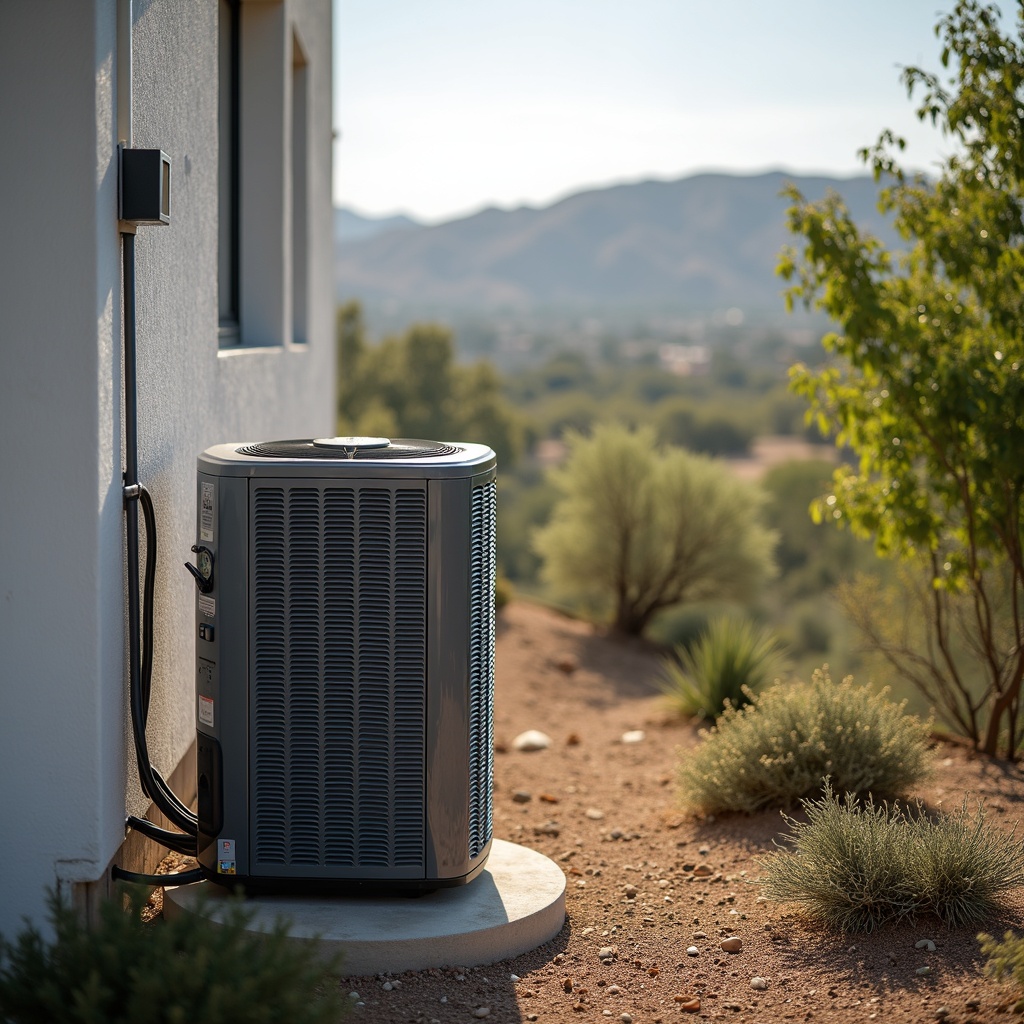
Before wind season begins (typically October through May), establish a mandatory clearance zone around your condenser. Remove all patio furniture, potted plants, decorative rocks, and yard equipment from within three feet of the unit. In neighborhoods like Devonshire where mature trees drop heavy branches, this clearance becomes critical. Santa Ana winds don’t just push objects—they lift and hurl them. A lightweight resin chair that seems harmless on a calm day becomes a projectile capable of denting coil fins or cracking the condenser cabinet when winds reach 50-70 mph.
Walk your property and identify potential missile hazards: loose roof tiles, unsecured trash bins, children’s toys, garden tools. Secure or relocate everything that could blow into your HVAC equipment. If you have gravel landscaping near the unit, consider replacing it with heavier river rock or removing it entirely during wind season. Fine gravel becomes airborne in sustained 40+ mph winds and gets sucked directly into condenser coils, blocking airflow and forcing the system to work harder.
Step 2: Inspect and Reinforce Physical Anchoring
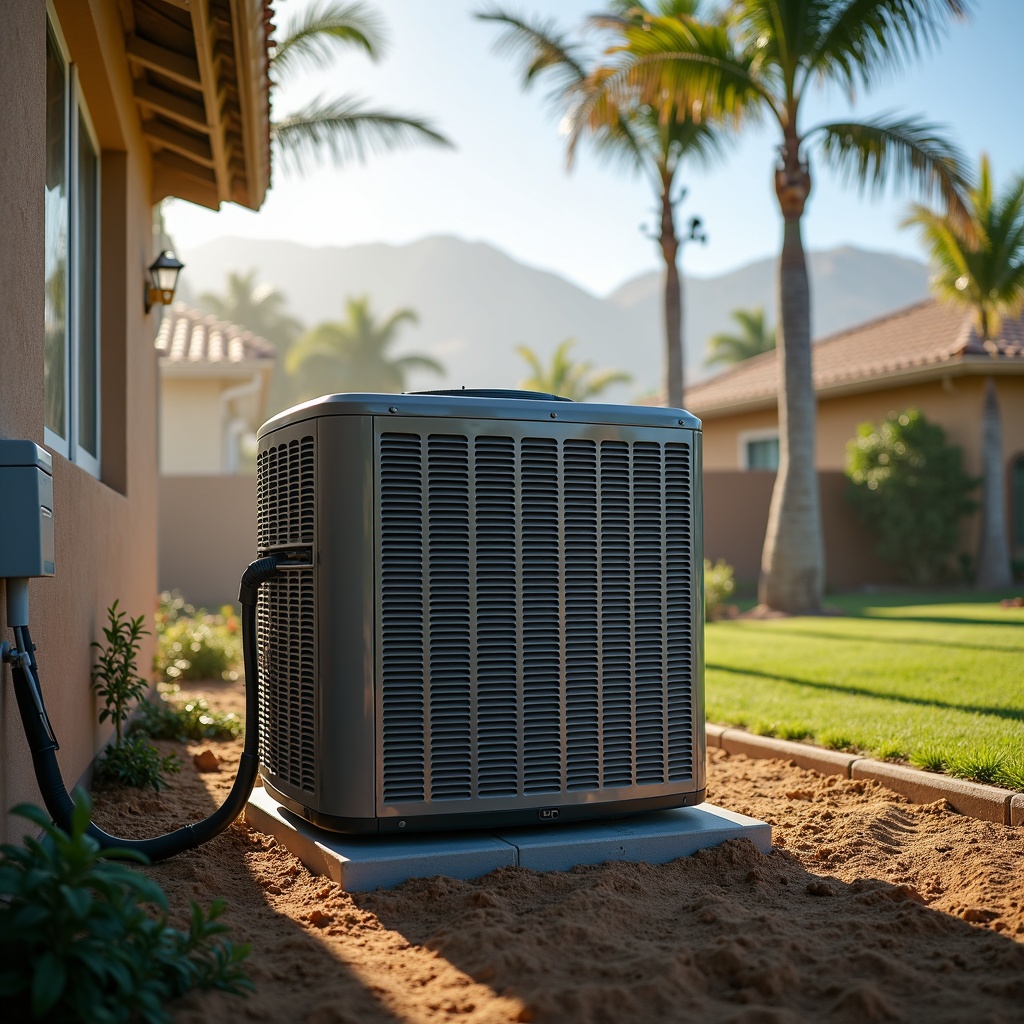
Most residential condenser units sit on concrete pads with minimal anchoring. Check whether your unit is properly bolted down or simply resting on the pad. During severe Santa Ana events, wind can actually shift or tip units that aren’t secured. Look for mounting bolts connecting the unit base to the concrete pad. If they’re rusted, loose, or missing entirely, schedule a professional inspection.
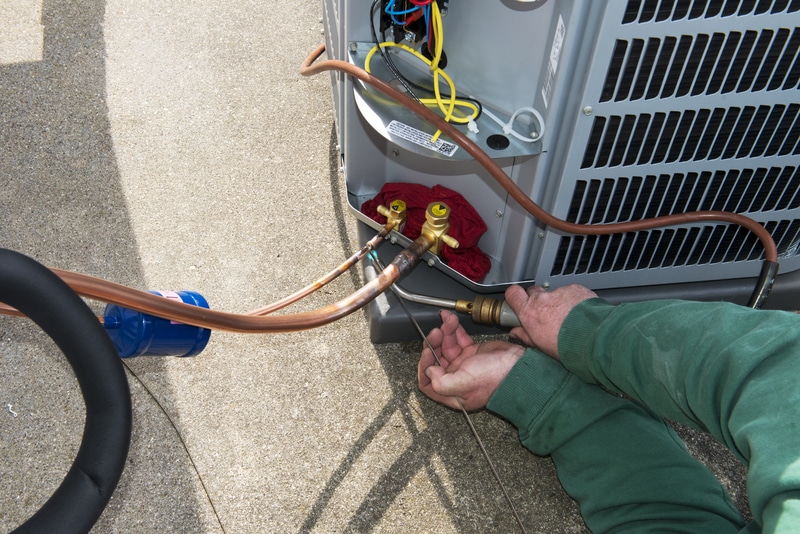
For homes in the Porter Ranch Adjacent area built before 2000, many units were installed without proper seismic or wind anchoring. An HVAC services in Northridge technician can retrofit anchoring hardware for $200-$400, a worthwhile investment considering replacement costs. Also inspect the refrigerant line set where it enters the house. High winds can cause the lines to vibrate against the building, eventually wearing through insulation and creating leaks. Add foam insulation or rubber grommets at any friction points.
Step 3: Install a Wind-Rated Protective Screen (Not a Tarp)
Never cover your condenser unit with a tarp or solid cover during wind events. This seems counterintuitive, but solid covers actually increase wind resistance and can cause the unit to shift or topple. Instead, install a wind-rated protective screen on the windward side of your unit—typically the north or northeast side in Northridge, as Santa Ana winds flow from inland desert regions toward the coast.
These screens (available at HVAC supply stores for $80-$200) allow airflow while deflecting debris. Mount them 18 inches from the unit to avoid restricting air circulation. Some homeowners in the CSUN area have successfully used decorative metal panels designed for outdoor privacy screens, which serve double duty as wind barriers. Just ensure any screen has at least 50% open area to maintain proper airflow when the system operates.
Additional Pre-Wind Checklist Items
Trim tree branches within 10 feet of your outdoor unit. Palm fronds are particularly problematic—they’re heavy, sharp-edged, and abundant during Santa Ana season. One falling frond can bend dozens of coil fins. Check your homeowner’s insurance policy to confirm coverage for wind damage to HVAC equipment. Most standard policies cover it, but some require specific wind coverage riders. Document your unit’s condition with photos before wind season for insurance purposes.
Step 4: Conduct a Post-Wind Damage Assessment
After winds subside, perform a systematic inspection before restarting your system. Turn off power at the breaker, then visually inspect the condenser unit for debris penetration, bent coil fins, or shifted components. Remove any visible debris by hand—never use a pressure washer or compressed air, which can further damage delicate fins. If coil fins are bent, use a fin comb (available for $15 at hardware stores) to carefully straighten minor damage.
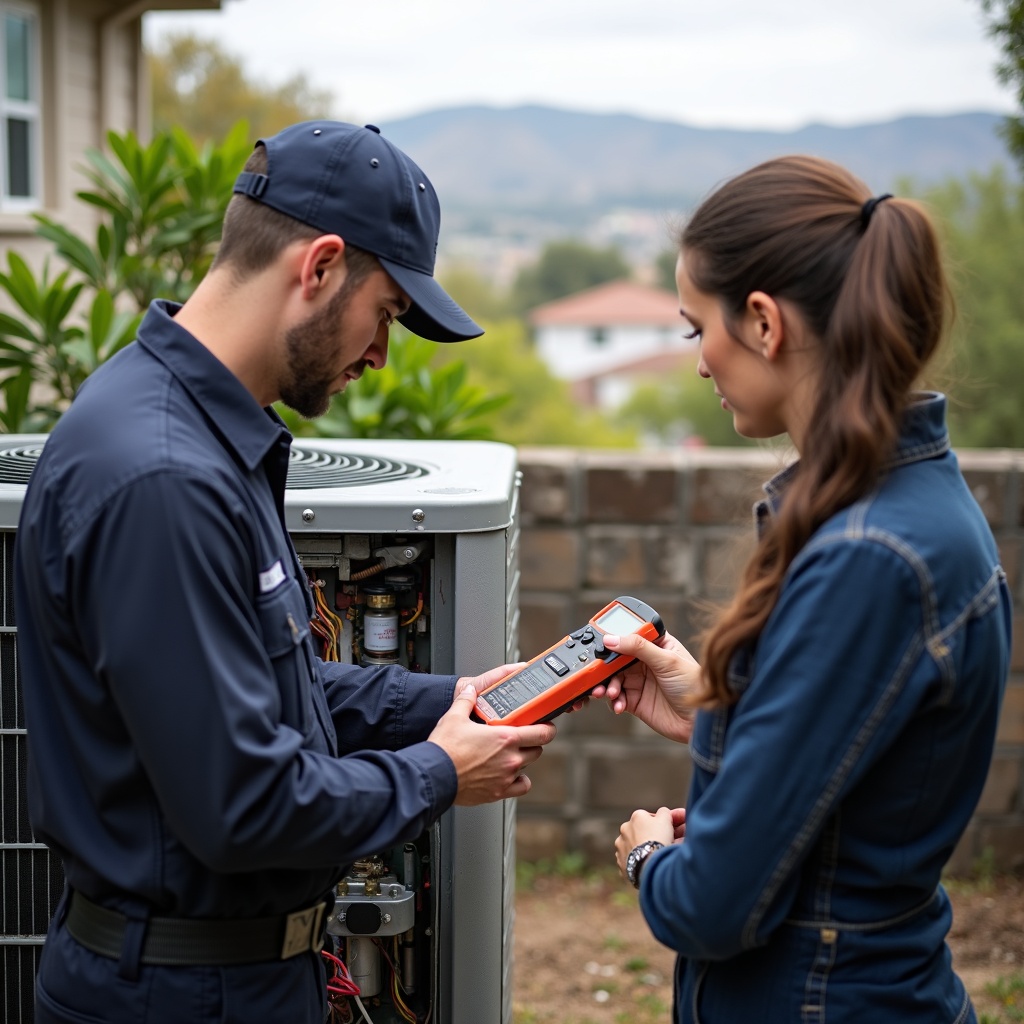
Check inside the top panel (if you can safely remove it) for leaves, dirt, or small debris that may have entered the fan housing. Inspect electrical connections for looseness caused by vibration during high winds. Look at the fan blades for cracks, chips, or imbalance. Even minor blade damage creates vibration that damages bearings over time. If you spot any of these issues, call ACE Appliance Heating and Cooling — Homepage at (818) 939-4882 before operating the system.
Attic Inspection for Homes With Roof-Mounted Equipment
If your home has attic ductwork (common in mid-range Northridge homes valued around $780,000), inspect the attic after major wind events. High winds can lift roof vents, allowing massive amounts of dust to penetrate duct seams. One homeowner near Northridge Fashion Center reported a half-inch layer of fine dust throughout their ductwork after December 2024 Santa Ana winds—the result of compromised attic vents. Check Ductwork Repair, Installation & Maintenance Services for professional duct sealing if you find dust infiltration.
Insurance Coverage vs. Out-of-Pocket Repairs
Understanding when wind damage falls under homeowner’s insurance saves significant money. Standard policies typically cover HVAC damage from windblown debris (a tree branch puncturing your condenser) but may not cover indirect damage like dust infiltration or wear from operating during extreme conditions. Your deductible is the key factor—most Northridge homeowners carry $1,000-$2,500 deductibles. If repair costs fall below your deductible, you’ll pay out-of-pocket.
Insurance usually doesn’t cover preventive measures like installing wind screens or anchoring upgrades. However, these investments prevent claims that could raise your premiums. Document everything: photograph damage immediately, save repair estimates, and keep a log of wind speeds from local weather stations. The National Weather Service recorded gusts exceeding 70 mph in the San Fernando Valley during January 2025 Santa Ana events—documentation like this strengthens insurance claims.
| Damage Type | Typically Covered by Insurance | Usually Out-of-Pocket |
|---|---|---|
| Direct debris impact | Yes (minus deductible) | Small repairs under deductible |
| Dust/dirt infiltration | Rarely | Professional cleaning $200-$500 |
| Preventive modifications | No | Wind screens, anchoring $300-$600 |
| Component failure during wind event | Depends on cause determination | If deemed wear-related |
For middle-income Northridge homeowners balancing quality with budget consciousness, the decision often comes down to math: Is a $350 repair worth filing a claim that could increase premiums $200 annually for three years? Usually not. But a $2,500 condenser replacement absolutely justifies a claim. Work with your Heating Repair & Installation contractor to get detailed documentation that satisfies insurance adjusters.
Get Professional Pre-Season Protection
Santa Ana wind season in Northridge runs October through May, with peak intensity typically December through February. Don’t wait until a high wind warning is issued to protect your system—by then it’s too late. ACE Appliance Heating and Cooling offers pre-season HVAC inspections that identify vulnerabilities specific to wind exposure. Our technicians assess your unit’s anchoring, clearance zones, and structural integrity, then recommend cost-effective protective measures tailored to your property’s microclimate.
We serve all Northridge ZIP codes (91324, 91325, 91326, 91327) and understand local wind patterns that affect neighborhoods differently. Homes near the foothills experience different wind dynamics than properties closer to HVAC in Granada Hills. Call us at (818) 939-4882 to schedule a wind-readiness assessment before the next Santa Ana event. Investing $200 in preventive measures today can save you $2,000 in emergency repairs during the next 60 mph wind event.
Get Your Free Quote Today