Commercial AC Blower Motor Service on a Rooftop Unit in Westlake Village
Commercial rooftop HVAC systems in Westlake Village are engineered to handle far greater heating and cooling demands than standard residential equipment. Because of this, their internal components are built on a much larger scale. One of the biggest differences is the blower motor assembly. While most residential furnaces and package units use direct-drive motors that connect directly to the fan wheel, commercial rooftop systems commonly rely on belt-driven blower assemblies. In a belt-driven setup, the motor is mounted separately from the blower wheel and transfers power through a pulley-and-belt system. This configuration allows the unit to move substantially higher volumes of air through expansive duct networks found in commercial buildings. However, it also introduces additional maintenance requirements, including belt wear, pulley alignment, bearing condition, and motor tension adjustments — all potential failure points that residential systems simply don’t have.
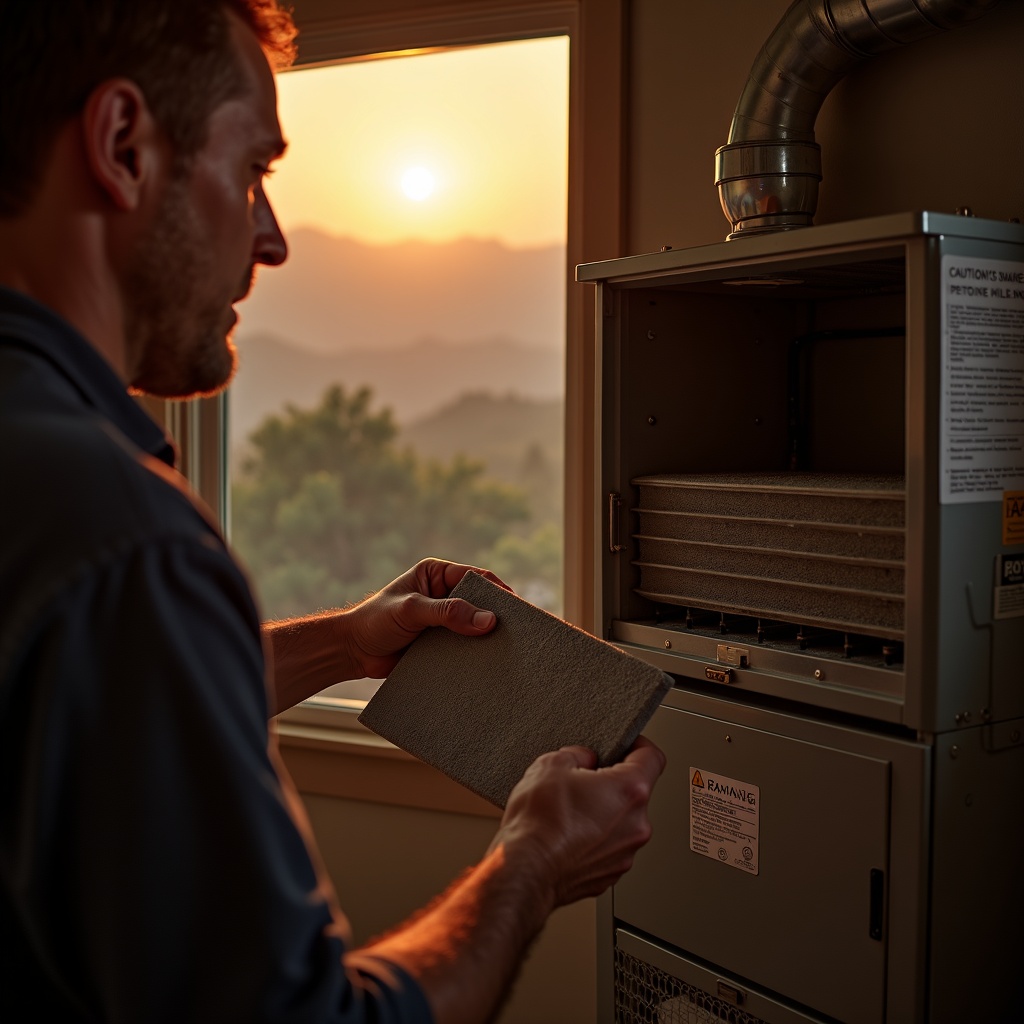
Our Westlake Village AC Repair team was recently called to a commercial property where tenants reported that the building was not cooling properly, even though the rooftop unit appeared to be running. After accessing the large commercial package unit and removing the service panel, our technician discovered that the belt-driven blower motor assembly required service. To properly inspect the system, the evaporator coil was carefully removed to create adequate working space. The motor, belt, pulleys, bearings, and electrical connections were thoroughly evaluated to identify the root cause of the airflow failure. Once the necessary repairs and adjustments were completed, full airflow was restored and the cooling system returned to proper operation, ensuring the comfort of the building’s occupants.
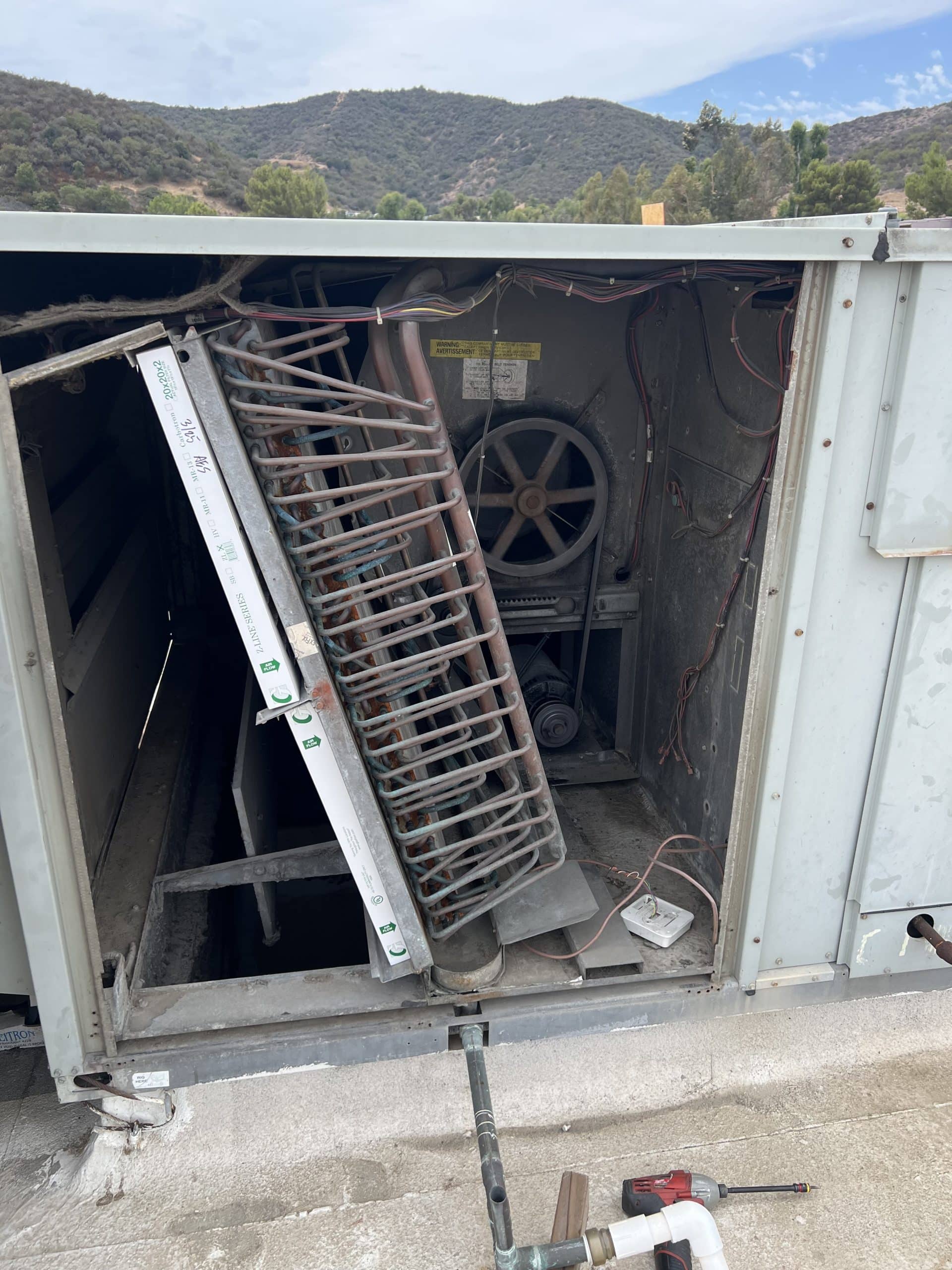
How Commercial Belt-Driven Blower Systems Differ From Residential Units
In a residential system, the blower motor connects directly to the fan wheel with a shared shaft. This is a simple, compact design that works well for single-family homes. Commercial rooftop units handle a much greater airflow demand and use a belt-driven system where the motor and blower wheel are mounted separately and connected by a V-belt running between two pulleys. This configuration provides several advantages for commercial applications, but it also creates additional components that require regular inspection and maintenance:
Because of the size, weight, and complexity of commercial blower assemblies, this type of repair requires specialized knowledge and tools that go beyond standard residential HVAC service.
Warning Signs of a Failing Commercial Blower Motor
Commercial building managers and property owners should watch for these common indicators that the blower motor or belt-drive system needs attention. Reduced airflow throughout the building is often the first thing tenants notice, followed by unusual noises from the rooftop that can sometimes be heard inside the building. A high-pitched squealing sound typically points to a worn or slipping belt, while grinding or rumbling noises suggest bearing failure in the motor or blower shaft. If the system trips its safety controls or breakers repeatedly, the motor may be drawing excessive amperage due to internal winding damage or a seized bearing. A burning rubber smell near the roof access point can also indicate a belt that is slipping against a locked pulley.
In commercial settings, a complete loss of airflow does not just affect comfort. Depending on the type of business, it can disrupt operations, compromise stored inventory, affect equipment that relies on climate control, and create liability concerns for tenants and customers.
Why Westlake Village Commercial Units Need Proactive Maintenance
Westlake Village sits at the edge of the Santa Monica Mountains, where hillside terrain channels dust, pollen, and wildfire ash directly into rooftop equipment. Commercial rooftop units in this area accumulate debris faster than systems in flatter, more sheltered locations. That debris coats the evaporator and condenser coils, adds drag to the blower wheel, and gets pulled into the belt-drive assembly where it accelerates belt wear and bearing contamination. The summer heat in Westlake Village regularly pushes past 100 degrees, and rooftop surface temperatures climb even higher, adding thermal stress to motor windings and belt material that are already working at full capacity to cool a commercial space.
Without a scheduled maintenance program, these conditions shorten the lifespan of every component inside the unit. A belt that should last two years may fail in one. A motor that should run for a decade may overheat and burn out in five or six. The most cost-effective approach for any commercial property owner in Westlake Village is a preventative maintenance schedule that includes belt inspection and replacement, pulley alignment checks, bearing lubrication, coil cleaning, and a complete blower motor evaluation at least twice per year.
Trusted Commercial HVAC Service in Westlake Village
If your commercial rooftop AC unit has lost airflow, is making unusual noises, or is no longer keeping your building at a comfortable temperature, the blower motor or belt-drive system may need professional attention. ACE Appliance Heating & Cooling provides expert commercial HVAC repair, blower motor service, and preventative maintenance throughout Westlake Village and the surrounding areas. Our technicians are experienced with large-scale rooftop equipment and arrive prepared with the tools and knowledge to diagnose and repair commercial belt-driven blower systems efficiently.
Call us today at (818) 939-4882 for fast, reliable commercial and residential service.
Westlake Village FAQ’s – Commercial AC Blower Motor Service
Get Your Free Quote Today