Understanding Why Your Chatsworth AC System Isn’t Delivering Cold Air

📋 In This Guide
- ▸The Refrigerant Leak Problem: Why Low Coolant Means Warm Air
- ▸Dirty Air Filters and Restricted Airflow: The Silent Performance Killer
- ▸Frozen Evaporator Coils: When Ice Blocks Your Cooling Capacity
- ▸Thermostat Malfunctions: When Your Control System Misleads Your AC
- ▸Compressor and Condenser Problems: When the Heart of Your System Fails
- ▸Ductwork Leaks and Air Loss: The Hidden Efficiency Thief
- ▸Electrical Issues and Safety Concerns: When Power Problems Prevent Cooling
- ▸How Chatsworth's Unique Climate Conditions Affect Your AC System
When temperatures climb in Chatsworth’s 91311 area, the last thing you need is an air conditioner pumping warm air through your vents. Whether you live in Chatsworth Lake Manor, Indian Hills, or near Santa Susana Pass State Historic Park, a malfunctioning AC system can quickly turn your $920,000 home investment into an uncomfortable living space.
As professional HVAC technicians serving Chatsworth and surrounding communities like West Hills and Granada Hills, we understand how frustrating it is when your cooling system fails during the hottest months. The good news? Many warm air problems have identifiable causes and solutions—some you can even troubleshoot yourself before calling for professional AC repair in Chatsworth.
This comprehensive guide walks you through the seven most common reasons your air conditioner blows warm air, helping you diagnose issues and understand when DIY fixes work and when professional intervention is necessary. Let’s restore your home comfort and protect your valuable HVAC investment.
The Refrigerant Leak Problem: Why Low Coolant Means Warm Air
Refrigerant is the lifeblood of your air conditioning system, circulating through coils to absorb heat from your home and release it outdoors. When refrigerant levels drop due to leaks, your AC can’t effectively remove heat, resulting in lukewarm or warm air flowing from your vents.
Common symptoms of refrigerant leaks include:
• Hissing or bubbling sounds near the indoor or outdoor unit
• Ice formation on refrigerant lines or evaporator coils
• AC running constantly without achieving desired temperature
• Significantly higher energy bills despite normal usage patterns
• Warm air from vents even when the system appears to run normally
Chatsworth’s dusty conditions and temperature extremes can accelerate wear on refrigerant lines, particularly where connections join different components. Vibration from the compressor, combined with thermal expansion and contraction, gradually loosens fittings or creates microscopic cracks.
DIY diagnostic steps: Check visible refrigerant lines for obvious damage, oil stains (which indicate refrigerant leakage), or frost buildup. Never attempt to add refrigerant yourself—this requires EPA-certified technicians with specialized equipment.
When to call a professional: Immediately. Refrigerant leaks require professional detection equipment, proper repair techniques, and precise refrigerant charging to manufacturer specifications. Improper handling poses environmental and health risks.
Estimated repair costs: $250-$800 depending on leak location and refrigerant type. Complete coil replacement may cost $1,000-$2,500. For Chatsworth homeowners investing in high-value properties, professional repair protects both comfort and resale value.
Dirty Air Filters and Restricted Airflow: The Silent Performance Killer
A clogged air filter is surprisingly often the culprit behind warm air complaints. When filters become saturated with dust, pet hair, and debris, they restrict airflow over the evaporator coils, severely compromising cooling efficiency.
Chatsworth’s proximity to the Santa Susana Mountains and open spaces means higher dust loads, especially during Santa Ana wind events. Many homeowners in areas like Iverson Ranch need to change filters more frequently than the standard 30-90 day recommendation.
Symptoms indicating filter problems:
• Noticeably reduced air pressure from supply vents
• System running longer cycles without reaching thermostat setting
• Visible dust accumulation around vents and registers
• Musty odors when AC first starts
• Higher energy consumption shown on utility bills
Extremely dirty filters can cause the evaporator coil to freeze (covered in the next section), compounding the problem and potentially damaging your system.
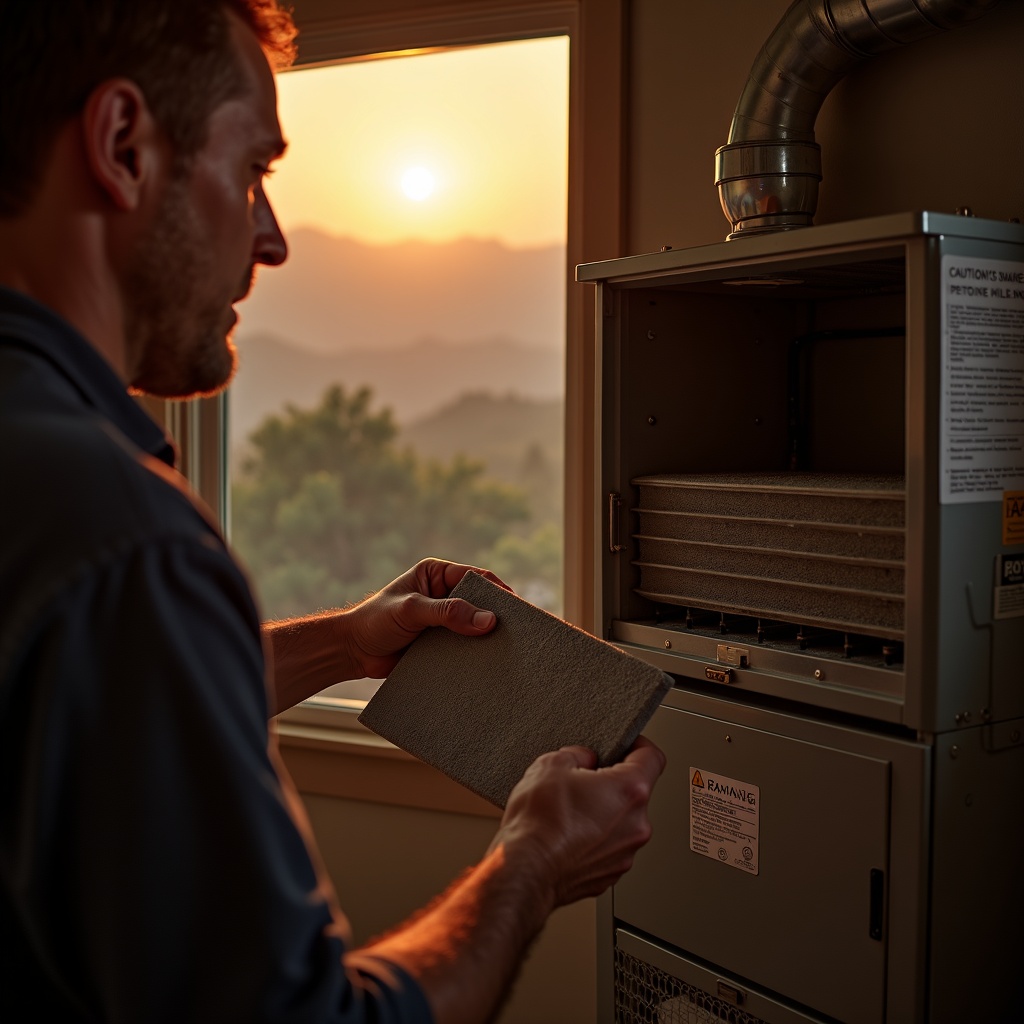
DIY solution: Locate your filter (typically in the return air grille, furnace cabinet, or dedicated filter slot), remove it, and hold it up to light. If you can’t see through it easily, it needs replacement. Standard pleated filters cost $15-$30 for quality options. Consider upgrading to MERV 8-11 rated filters for better dust capture in Chatsworth’s environment.
Prevention tip: Set smartphone reminders every 30 days to check your filter. Keep spare filters on hand so you’re never caught without a replacement. This simple maintenance protects your entire HVAC system in Chatsworth from premature wear.
Frozen Evaporator Coils: When Ice Blocks Your Cooling Capacity
If you notice ice forming on the refrigerant lines entering your home or on the evaporator coil itself, you’ve identified a serious problem causing warm air output. Frozen coils can’t absorb heat from your indoor air, effectively shutting down the cooling process.
Multiple factors cause coil freezing:
• Restricted airflow from dirty filters (as discussed above)
• Low refrigerant levels preventing proper heat absorption
• Blocked return air vents reducing circulation
• Malfunctioning blower fan failing to move sufficient air
• Running AC when outdoor temperatures drop below 60°F
In Chatsworth’s climate, frozen coils typically result from maintenance neglect rather than cold weather operation. The combination of dust accumulation and delayed filter changes creates perfect conditions for ice formation.
DIY diagnostic approach: Turn off your AC at the thermostat and switch the fan to “on” (not “auto”). This circulates air without cooling, allowing ice to melt. Place towels around the indoor unit to catch water. Full thawing takes 2-8 hours depending on ice thickness.
After thawing: Replace the air filter, check that all supply and return vents are open and unobstructed, and verify proper airflow. Restart the system and monitor for 30 minutes. If ice reforms quickly, you likely have a refrigerant issue requiring professional service.
Professional diagnosis needed when: Ice returns after filter replacement, you suspect refrigerant problems, or the blower fan sounds unusual. ACE Appliance Heating and Cooling can diagnose the root cause and prevent recurring freezing issues.
Repair costs: If caused by dirty filters, just the filter cost. Blower motor replacement: $400-$800. Refrigerant-related issues: $250-$1,200 depending on complexity.
Thermostat Malfunctions: When Your Control System Misleads Your AC
Your thermostat acts as mission control for your entire cooling system. When it malfunctions, sends incorrect signals, or loses calibration, your AC may run without actually cooling, blow warm air, or cycle erratically.
Common thermostat issues include:
• Incorrect temperature readings due to poor placement (near heat sources, direct sunlight, or drafts)
• Dead batteries causing intermittent operation or system shutdown
• Loose wiring connections preventing proper communication
• Incorrect settings (mode set to “heat” instead of “cool,” fan set to “on” instead of “auto”)
• Aging mechanical thermostats losing calibration accuracy
• Smart thermostat software glitches or connectivity problems
In Chatsworth’s Iverson Ranch and Santa Susana neighborhoods, we frequently find thermostats installed on exterior walls that receive afternoon sun, causing false temperature readings that prevent proper cooling cycles.
DIY troubleshooting steps:
1. Verify the thermostat is set to “cool” mode with the fan on “auto”
2. Set temperature 5 degrees below current room temperature
3. Replace batteries if your model uses them (most require replacement annually)
4. Clean dust from the thermostat face and internal components using compressed air
5. Check that the thermostat wire connections are secure
6. Verify no furniture, curtains, or objects block the thermostat
When professional help is needed: If basic troubleshooting doesn’t resolve the issue, wiring problems or component failure may exist. Upgrading to a modern programmable or smart thermostat often solves chronic problems while improving energy efficiency by 10-15%.
Cost considerations: Basic thermostats: $25-$100 (DIY installation possible). Programmable models: $100-$250. Smart thermostats with professional installation: $250-$500. For Chatsworth homeowners with $920,000 properties, smart thermostats add value while reducing energy costs.
Compressor and Condenser Problems: When the Heart of Your System Fails
The outdoor condenser unit houses your AC’s compressor—essentially the heart of the cooling system. When the compressor or associated components fail, your system may run but produce only warm air since it can’t effectively compress and circulate refrigerant.
Warning signs of compressor/condenser issues:
• Outdoor unit making loud grinding, squealing, or chattering noises
• Hard starting (unit struggling to begin operation, lights dimming when it starts)
• Condenser fan not spinning when the system runs
• Outdoor unit excessively hot to the touch
• Circuit breaker tripping repeatedly when AC starts
• Outdoor unit silent even when thermostat calls for cooling
Chatsworth’s dust and debris from nearby hills can clog condenser coils, forcing the compressor to work harder and potentially causing premature failure. Additionally, vegetation growth around outdoor units in neighborhoods like Chatsworth Lake Manor restricts airflow, overheating critical components.
DIY inspection steps: Clear all vegetation, leaves, and debris at least two feet from the outdoor unit. Use a garden hose to gently spray the condenser coils from inside out (never use a pressure washer, which damages fins). Verify the condenser fan spins freely when you manually rotate it (power off first!).
When to call professionals immediately: If you hear grinding noises, the compressor won’t start, or you smell burning odors. Compressor failure often results from neglected maintenance, making regular professional service essential.
Repair vs. replacement considerations: Compressor replacement costs $1,500-$2,800 installed. If your AC system exceeds 10-12 years old, complete system replacement often makes better financial sense, particularly with modern units offering 30-40% better efficiency. Our AC repair specialists in Chatsworth provide honest assessments to help you make informed decisions.
Ductwork Leaks and Air Loss: The Hidden Efficiency Thief
Even when your AC produces perfectly cold air at the unit, significant ductwork leaks can warm that air before it reaches your living spaces. Leaks typically develop at connection points, damage occurs from pests or age, or insulation deteriorates in unconditioned spaces.
Indicators of ductwork problems:
• Certain rooms consistently warmer than others
• High energy bills despite normal AC operation
• Excessive dust in your home
• Weak airflow from specific vents
• Visible gaps or disconnected duct sections in accessible areas
• Whistling sounds from walls or ceilings when AC runs
Chatsworth homes, particularly older properties in Indian Hills, often have ductwork running through hot attics where summer temperatures exceed 140°F. Even well-functioning systems lose cooling capacity when conditioned air travels through insufficiently insulated or leaking ducts in these extreme environments.
DIY assessment: During AC operation, carefully feel around accessible duct connections in attics, crawlspaces, and garages for air leakage. Check insulation condition—compressed, water-damaged, or missing insulation requires replacement. Listen for air hissing from walls or ceiling areas.
Professional duct evaluation: Comprehensive duct testing uses specialized equipment to measure total air loss and identify specific leak locations hidden behind walls and in ceiling cavities. Professional ductwork services include sealing leaks, adding insulation, and repairing damaged sections.
Investment and returns: Professional duct sealing costs $1,000-$2,500 for typical homes, but reduces energy waste by 20-30%, paying for itself within 3-5 years through lower utility bills. For Chatsworth’s high-value homes, proper ductwork also improves comfort consistency and system longevity.
Electrical Issues and Safety Concerns: When Power Problems Prevent Cooling
Electrical problems can prevent your AC from running properly or cause it to operate without actually cooling. These issues range from simple breaker trips to serious wiring failures requiring immediate attention.
Common electrical problems affecting AC performance:
• Tripped circuit breakers cutting power to outdoor or indoor units
• Blown fuses in the disconnect box near the condenser
• Loose or corroded electrical connections creating resistance
• Failing capacitors preventing the compressor or fan motors from starting
• Faulty contactors preventing power delivery to major components
• Damaged wiring from pests, age, or environmental exposure
Capacitor failure is particularly common in Chatsworth’s hot climate. These components help start and run motors, and high heat accelerates their degradation. A failing capacitor causes hard starting, humming without running, or complete failure to start.
Safe DIY checks: Verify the circuit breaker hasn’t tripped (reset if needed). Check the outdoor disconnect box for blown fuses (with power off). Listen for humming at the outdoor unit—humming without running often indicates capacitor failure.
What NOT to do: Never attempt to work inside the electrical panels, condenser unit, or furnace cabinet unless you’re a qualified electrician or HVAC technician. AC units store lethal voltage even when powered off.
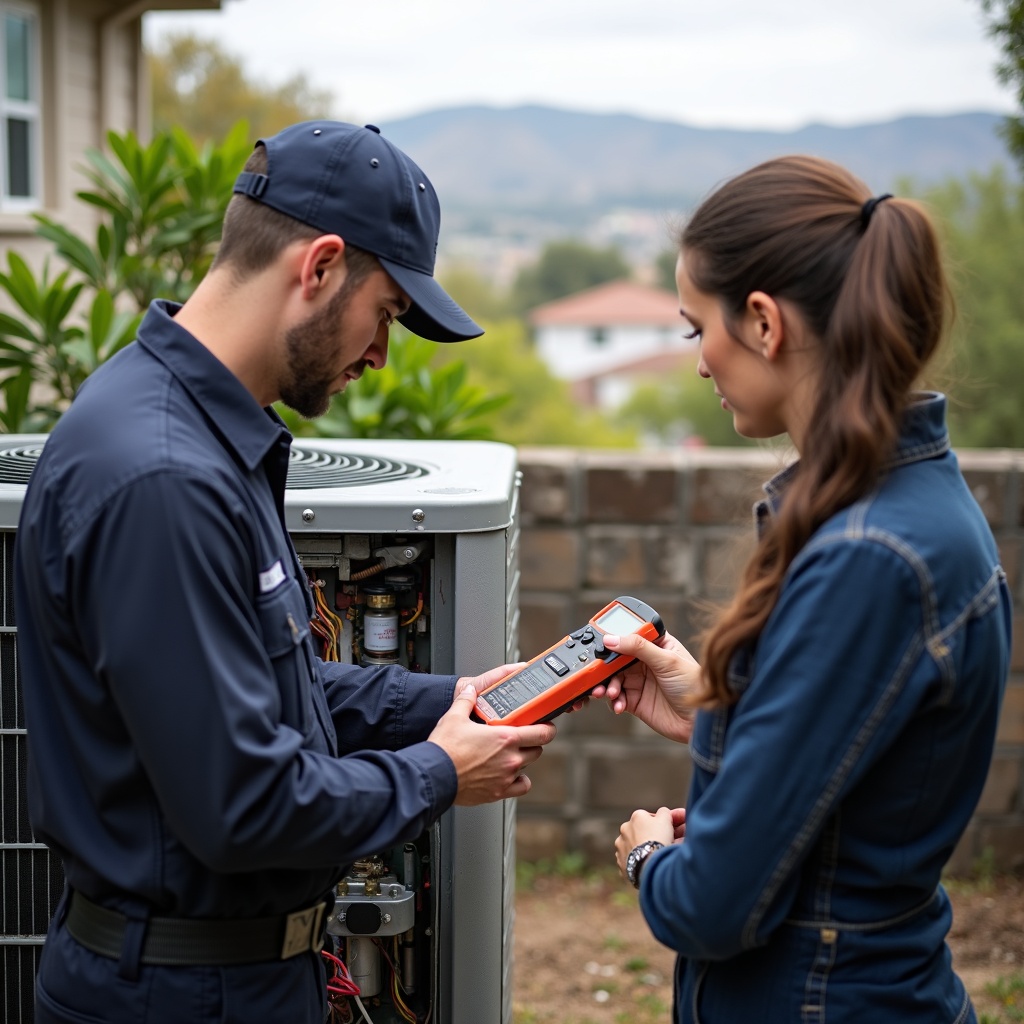
Professional electrical diagnosis: Technicians use multimeters to test voltage, amperage, and capacitor function, identifying failing components before complete failure occurs. Annual maintenance catches electrical problems early, preventing emergency breakdowns during peak summer heat.
Repair costs: Capacitor replacement: $150-$400. Contactor replacement: $150-$350. Wiring repairs: $200-$800 depending on extent. Complete electrical system evaluation during annual AC maintenance costs just $95 and prevents costly failures.
How Chatsworth’s Unique Climate Conditions Affect Your AC System
Chatsworth’s location near the Santa Susana Mountains creates specific challenges for air conditioning systems. Understanding these local factors helps homeowners maintain their equipment and prevent warm air problems.
Chatsworth-specific AC challenges:
High dust loads: Wind patterns carry dust from surrounding hills and open spaces, quickly clogging filters and coating condenser coils. Residents in Chatsworth Park South and near Chatsworth Lake Manor experience particularly high dust accumulation, requiring filter changes every 20-30 days instead of standard 60-90 day intervals.
Temperature extremes: Summer temperatures regularly exceed 95°F, forcing AC systems to work harder and longer. This extended runtime accelerates wear on all components, particularly compressors, capacitors, and fan motors.
Dry conditions: Low humidity means less natural cooling and increased static electricity that can affect electronic controls and thermostats. Dust particles become airborne more easily in dry conditions.
Wildfire smoke impact: Nearby wildfire events introduce fine particulates that quickly saturate standard filters and coat coils, reducing efficiency. During fire season, check filters weekly and consider upgrading to higher MERV-rated filters.
Vegetation concerns: Chatsworth’s natural landscape means more pollen, leaves, and plant debris accumulating around outdoor units, restricting airflow and reducing efficiency.
Protection strategies for Chatsworth homeowners:
• Increase filter change frequency to monthly during summer months
• Schedule professional coil cleaning annually, ideally in spring before cooling season
• Maintain 2-3 feet of clearance around outdoor units
• Consider installing a whole-house air cleaner for better particle filtration
• Trim nearby vegetation regularly to prevent debris accumulation
• Schedule preventive maintenance in early spring to address wear before peak demand
Homeowners throughout neighborhoods like Indian Hills, Iverson Ranch, and Santa Susana who follow these practices experience fewer breakdowns and extend their system lifespan by 5-7 years on average.
Prevention Tips: Keeping Your AC Producing Cold Air Year-Round
Preventing warm air problems costs far less than emergency repairs during Chatsworth’s hottest days. Implement these practical strategies to maintain peak cooling performance:
Monthly homeowner maintenance:
• Check and replace air filters (every 20-30 days in Chatsworth)
• Verify all supply and return vents are open and unobstructed
• Clear vegetation and debris from around the outdoor unit
• Listen for unusual noises indicating developing problems
• Verify thermostat displays and responds correctly
Seasonal professional maintenance:
Annual professional tune-ups prevent 85% of AC failures and include:
• Refrigerant level verification and leak detection
• Electrical component testing and tightening
• Condenser and evaporator coil cleaning
• Blower motor lubrication and belt inspection
• Drain line clearing and cleaning
• Thermostat calibration and testing
• Complete system performance verification
Our $95 annual AC maintenance service provides comprehensive care that protects your investment and prevents costly breakdowns.
Upgrade considerations:
If your AC system exceeds 12-15 years old, consider replacement rather than major repairs. Modern systems offer:
• 30-40% better energy efficiency, reducing monthly utility costs
• Improved dehumidification for better comfort
• Quieter operation with advanced compressor technology
• Smart thermostat compatibility for optimal control
• Better air filtration options
• Enhanced reliability with improved components
For Chatsworth homeowners with high-value properties, a new high-efficiency system typically pays for itself within 7-10 years through energy savings while adding to home resale value.
Emergency preparedness:
Keep our number—(818) 939-4882—saved in your phone for quick access during AC emergencies. Having a relationship with a trusted local HVAC company means faster service when you need it most.
Why Choose ACE Appliance Heating and Cooling for Your Chatsworth AC Repairs
When your AC blows warm air in Chatsworth’s summer heat, you need fast, reliable service from technicians who understand local conditions. ACE Appliance Heating and Cooling serves Chatsworth, West Hills, Granada Hills, and throughout the San Fernando Valley with:
• Same-day service availability for emergency repairs
• Upfront, transparent pricing with no hidden fees
• Factory-trained technicians experienced with all major brands
• Fully stocked service vehicles for faster repairs
• Comprehensive diagnostics to identify root causes, not just symptoms
• Honest recommendations about repair vs. replacement
• Warranties on all parts and labor
• Local expertise understanding Chatsworth’s specific climate challenges
We’ve served Chatsworth’s tight-knit community for years, building our reputation on quality work and fair pricing. Our technicians live and work in the area, understanding the importance of reliable cooling in your home.
Whether you need simple troubleshooting, complex repairs, or system replacement advice, our team provides the expertise and service you deserve. Call us at (818) 939-4882 for fast, professional assistance.
Don’t let warm air problems compromise your comfort and your home’s value. Contact ACE Appliance Heating and Cooling today for expert AC repair service in Chatsworth and surrounding areas.
Get Your Free Quote Today