
❓ Frequently Asked Questions
Should I run my AC during poor air quality days in Burbank?
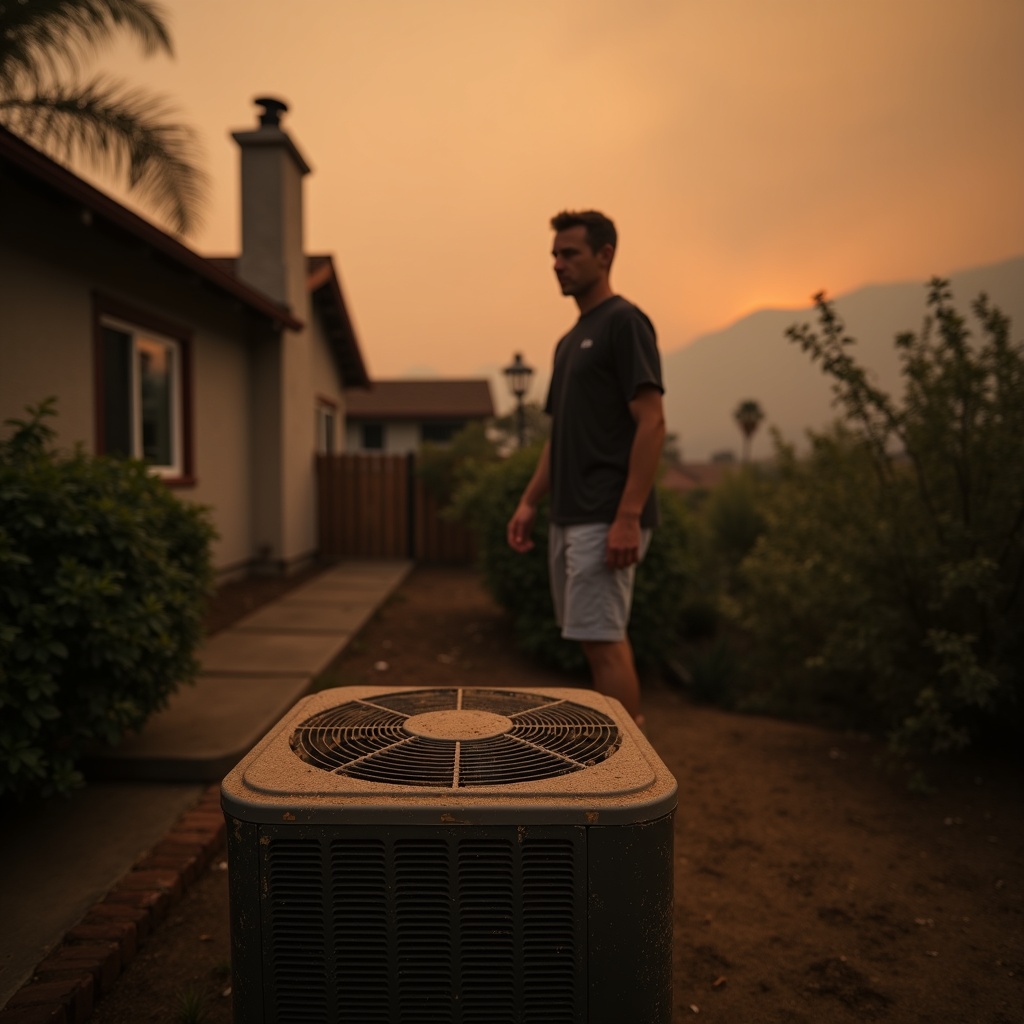
Yes, but only with a MERV 13 or higher filter installed and your system set to recirculate mode rather than drawing in fresh outdoor air. Running your HVAC continuously on "fan on" mode helps filter indoor air and prevent smoke infiltration when windows and doors remain sealed.
How often should I change my air filter during wildfire season?
During active smoke events, check your filter weekly and replace it when it appears visibly dark or when airflow seems reduced—often every 2–4 weeks instead of the typical 90-day interval. MERV 13 filters clog faster during heavy smoke exposure but provide essential protection that justifies the increased replacement frequency.
What causes the smoke smell in my house even after wildfires end?
Smoke particles and volatile organic compounds become embedded in ductwork, insulation, and HVAC components, continuing to off-gas for weeks after outdoor air quality improves. Professional duct cleaning and replacing contaminated filters eliminates these persistent indoor reservoirs that standard ventilation alone cannot address.
Can ACE Appliance Heating and Cooling assess my Burbank home for wildfire HVAC protection?
Absolutely. Call ACE Appliance Heating and Cooling at (818) 939-4882 to schedule a comprehensive wildfire preparedness assessment including filter compatibility testing, duct sealing, air purification options, and emergency protection strategies customized for your specific system and Burbank location.
🏘️ Same Topic in Nearby Cities
❓ Frequently Asked Questions
How much does spring HVAC maintenance cost in Burbank?
Professional AC tune-ups in Burbank typically cost between $75 and $200, depending on system type and the scope of service. This investment prevents costly emergency repairs during summer and can reduce your cooling costs by 15–20% through improved efficiency. Schedule early in spring for the best rates.
When should I schedule my AC tune-up in Burbank?
Schedule your professional AC tune-up in early to mid-March, well before Burbank's summer heat arrives. HVAC contractors have more availability in spring, parts are in stock, and you avoid emergency service premiums. Waiting until May means competing with homeowners whose systems already failed during the first heat wave.
Can I perform HVAC maintenance myself or do I need a professional?
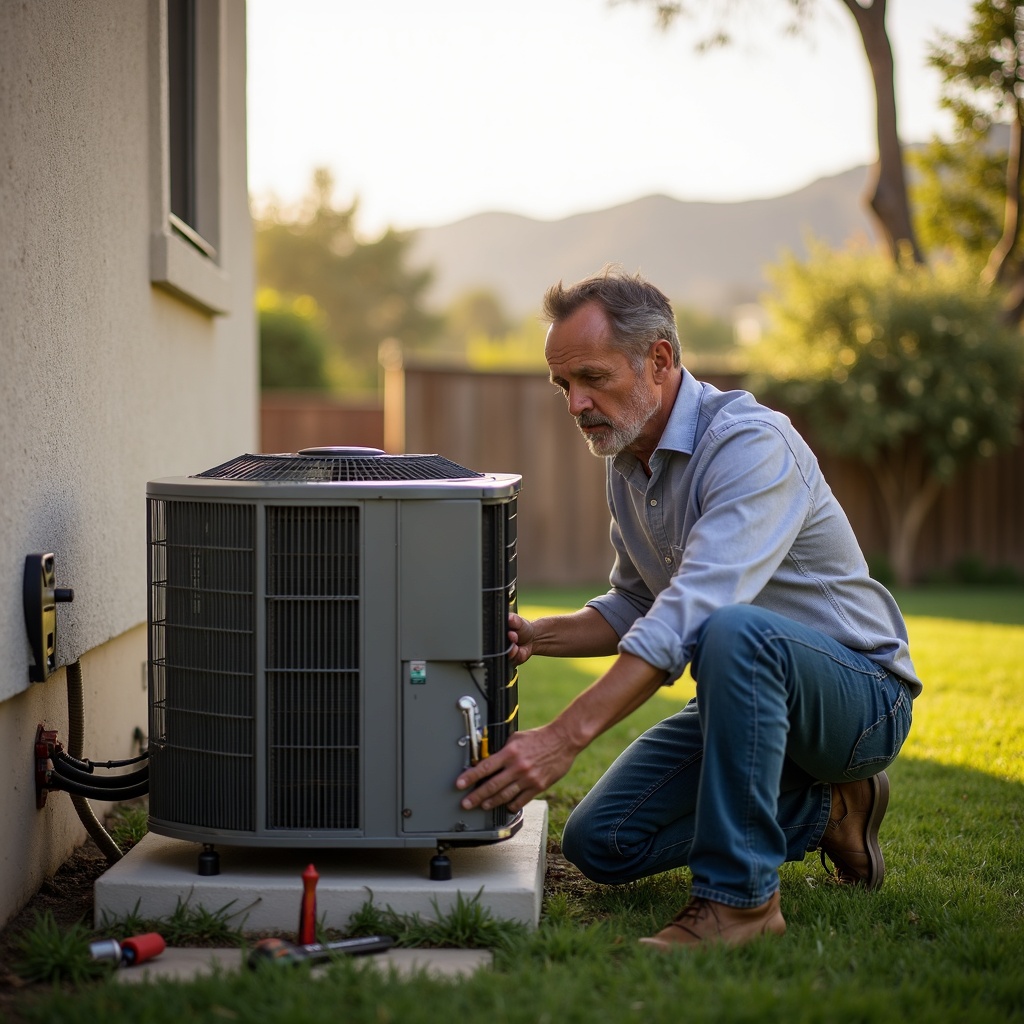
You can handle basic tasks like filter replacement, outdoor unit debris removal, and vent inspection yourself. However, professional maintenance is essential for refrigerant pressure testing (requires EPA certification), electrical component inspection, coil deep-cleaning, and safety control verification. A combination of DIY tasks and annual professional service provides the best protection.
How do I know if my Burbank AC needs repair or just maintenance?
Contact ACE Appliance Heating and Cooling at (818) 939-4882 immediately if you notice refrigerant leaks, burning smells, repeated breaker trips, grinding noises, or short-cycling. These indicate component failure requiring repair. Routine maintenance addresses normal wear before it becomes a breakdown, while repairs fix actual malfunctions.
🏘️ Same Topic in Nearby Cities
❓ Frequently Asked Questions
When should I schedule spring HVAC maintenance in Burbank?
The optimal timing for spring HVAC maintenance in Burbank is late March through early April. This window occurs before the rush of service calls that begins with the first heat wave, ensuring better technician availability and often promotional pricing. Scheduling during this period gives you time to address any identified issues before you depend on your system daily. Early scheduling also means your system is ready when Burbank temperatures suddenly climb into the 90s, which can happen as early as May. Contact ACE Appliance Heating and Cooling at (818) 939-4882 to reserve your appointment during this ideal maintenance window.
What does a professional spring AC tune-up include?
A comprehensive professional spring tune-up includes electrical system inspection and testing, refrigerant level measurement and adjustment, deep cleaning of evaporator and condenser coils, thermostat calibration, lubrication of motors and bearings, blower assembly inspection and cleaning, airflow verification, safety control testing, condensate drain clearing, electrical connection tightening, and operating temperature/pressure measurements. Technicians also inspect ductwork for leaks and provide a detailed report with recommendations. This thorough service addresses components that require specialized tools and training, catching developing problems before they cause summer breakdowns.
Can spring maintenance really reduce my summer cooling costs?
Yes, proper spring maintenance reduces summer cooling costs by 15-20% on average. Well-maintained systems operate more efficiently because clean coils transfer heat effectively, proper refrigerant charge ensures optimal performance, tight electrical connections prevent energy waste, and calibrated controls maintain consistent temperatures without short-cycling. For a typical Burbank household spending $200-300 monthly during summer, this represents $30-60 in monthly savings, or $180-360 over a six-month cooling season. The cost of annual maintenance typically pays for itself through these efficiency gains while also preventing expensive emergency repairs during peak summer months.
What HVAC maintenance tasks can I do myself before calling a professional?
Homeowners can complete several important tasks before professional service: replace or clean all air filters, clear debris from around the outdoor unit, trim vegetation to maintain 24-inch clearance, gently rinse outdoor coils with a garden hose, vacuum supply and return vents, verify nothing blocks airflow, test thermostat response, and pour diluted bleach into the condensate drain line. These tasks improve system performance and help identify concerns to discuss with your technician. However, tasks requiring specialized knowledge—refrigerant handling, electrical work, deep coil cleaning, and internal component inspection—should only be performed by licensed professionals to ensure safety and prevent equipment damage.