Pre-Wind vs. Post-Wind HVAC Protection: Which Strategy Saves More?
When wind advisories take effect for Agoura Hills, homeowners face a decision: invest time in preventive measures now or risk emergency AC repair costs later. Gusts reaching 55-70 mph can transform loose patio furniture into projectiles aimed directly at your outdoor condenser unit. For Agoura Hills residents with median home values exceeding $1 million, the choice between a 30-minute inspection and a $2,500 compressor replacement becomes obvious—yet thousands of homeowners skip the preparation step each wind season.
📋 In This Guide
About 10 to 25 Santa Ana wind events occur annually, with an average wind event lasting three days. During these periods, your HVAC system faces unique threats: wind-blown debris clogs air intakes, sustained gusts compromise outdoor unit anchoring, and extreme pressure differentials can force dust deep into ductwork. This narrative guide walks you through the complete Santa Ana winds HVAC Agoura Hills protection framework—from the 72 hours before National Weather Service advisories to the critical post-wind inspection that determines whether you’ll need AC repair in Agoura Hills.
💰 Typical Wind-Related AC Repair Costs
- Condenser Coil Straightening (Debris Impact): $200–$450
- Fan Blade Replacement (Wind Damage): $350–$650
- Refrigerant Line Repair (Shifting/Impact): $450–$950
- Compressor Replacement (Major Debris Damage): $1,800–$2,800
- Complete Outdoor Unit Replacement: $2,200–$4,500
The 72-Hour Pre-Wind Preparation Protocol
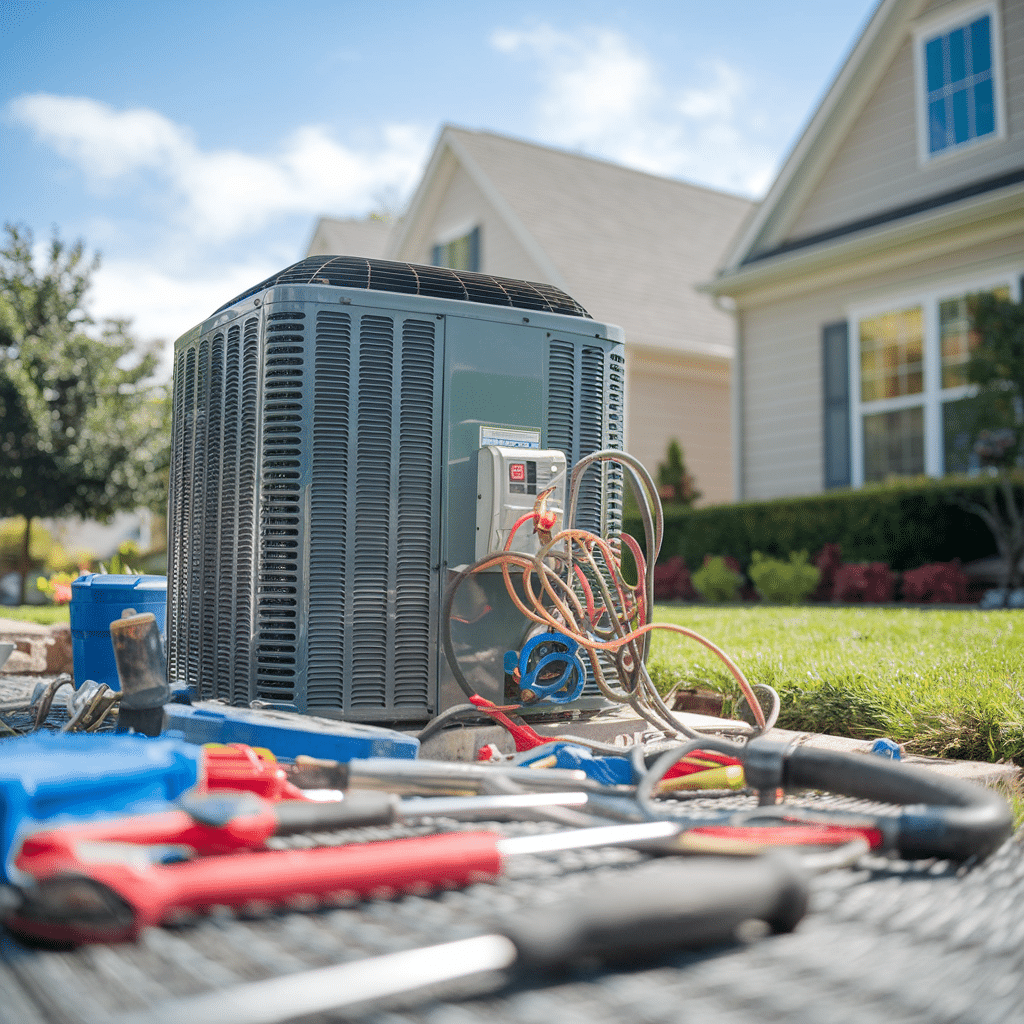
The moment you receive a Santa Ana wind advisory for Agoura Hills, your HVAC protection window opens. Start with your outdoor condenser unit—the component most vulnerable to wind damage. Walk the perimeter and establish a three-foot debris-free zone. Remove patio furniture, planters, gardening tools, children’s toys, and anything weighing less than 50 pounds that could become airborne. In neighborhoods like Lake Lindero and Morrison Ranch, where mature oak trees border many properties, inspect for dead branches overhanging your AC unit. A single falling limb can puncture refrigerant lines or crack the compressor housing.
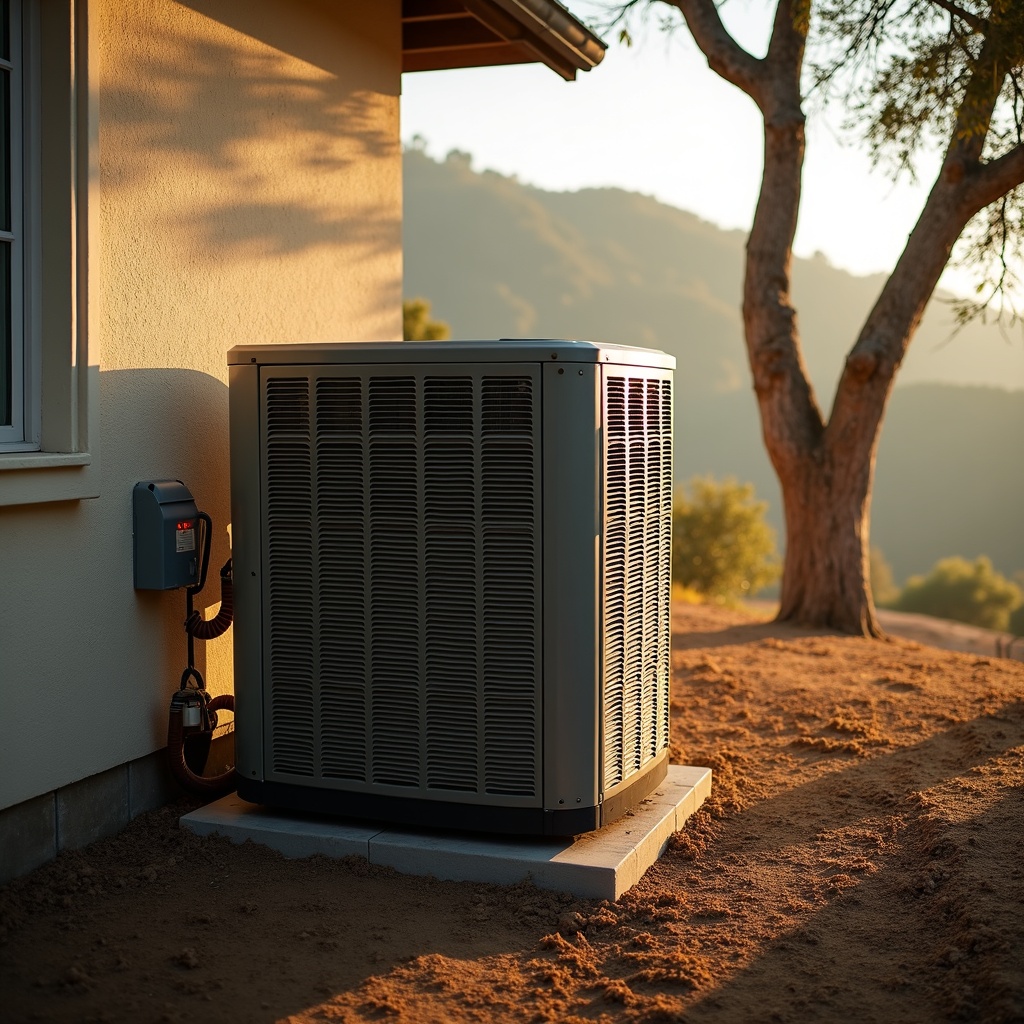
Examine the unit’s mounting. Your condenser should sit on a concrete pad or composite platform, secured with vibration isolators or mounting brackets. Crouch down and gently rock the unit—it shouldn’t shift more than a quarter-inch in any direction. If you detect movement, the anchoring has degraded and sustained 50+ mph gusts can shift the entire assembly, stressing refrigerant connections until they crack. For units installed on rooftop platforms (common in older Agoura Hills homes with limited ground space), verify that hurricane straps or seismic tie-downs remain intact. These installations face the highest wind loads and require professional inspection if you notice any loosening.
Protecting Air Intakes and Exhaust Vents
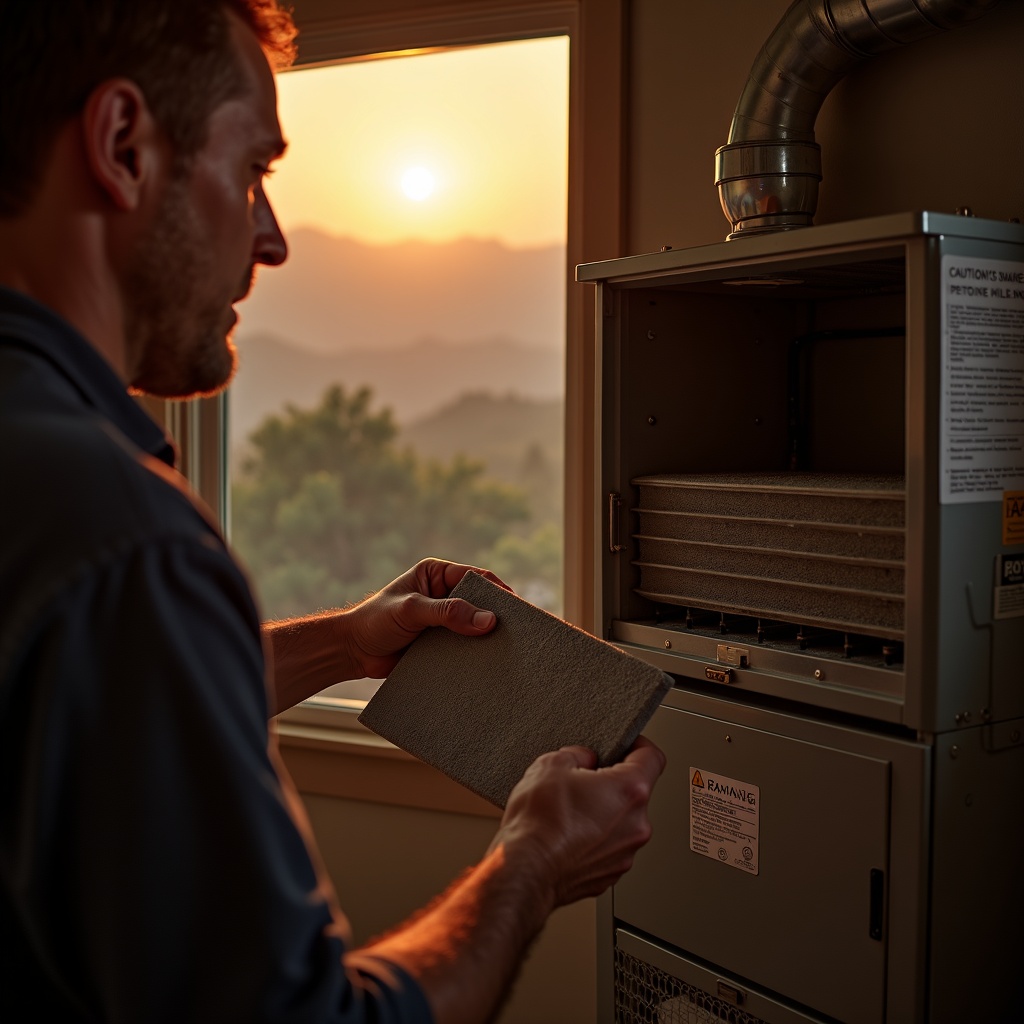
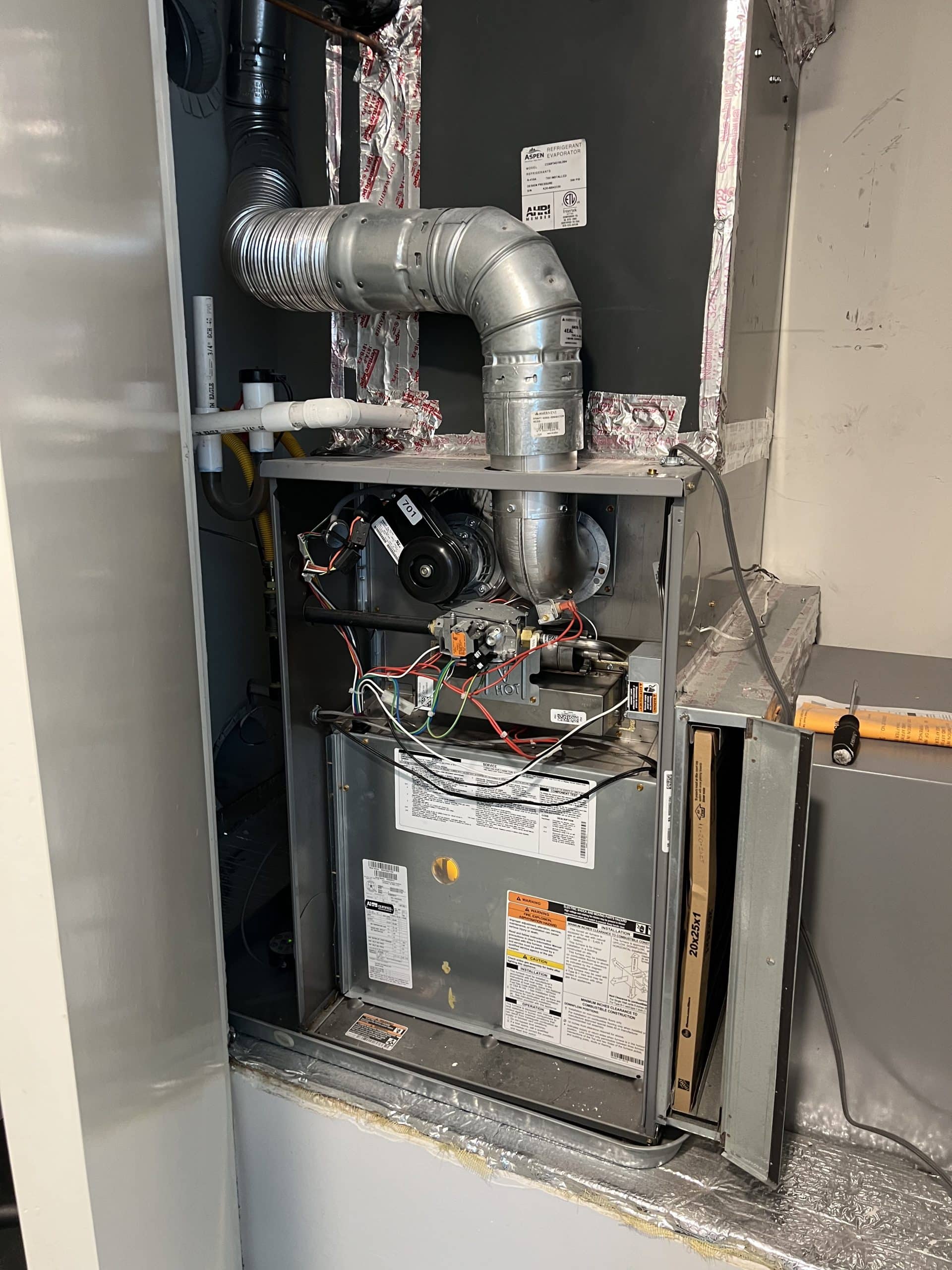
Santa Ana winds carry enormous dust loads from the Mojave Desert and local canyon systems. Your HVAC air intakes become entry points for this particulate matter. Replace your air filter with a fresh MERV 11-13 rated pleated filter—not the cheap fiberglass kind. High-efficiency filters create more airflow resistance under normal conditions, but during wind events they prevent the system-destroying dust infiltration that clogs evaporator coils and shortens compressor life by years.
Walk your home’s exterior and identify all HVAC penetrations: the larger return air intake (usually 14×20 inches or bigger), smaller exhaust vents, and any attic ventilation points connected to ductwork. Use painter’s tape and heavy-duty plastic sheeting to temporarily seal attic vents during peak wind periods if your attic contains exposed ductwork. This prevents the positive pressure created by 60 mph gusts from forcing dust through every seam in your duct system. Remove the temporary seals once winds subside to restore proper attic ventilation.
Insurance Documentation Before Damage Occurs
Before winds arrive, document your HVAC system’s pre-event condition. Wind damage is typically covered by homeowners insurance when caused by fire, hail, high winds, fallen trees, vandalism, or theft, but you’ll need proof that damage resulted from the wind event rather than pre-existing wear. Take clear photos of your outdoor unit from all four sides, showing the coil fins, fan assembly, and refrigerant line connections. Photograph the unit’s position relative to permanent landmarks (property corners, fence posts) so you can demonstrate if the wind shifted it.
Review your homeowners policy’s dwelling coverage terms. Homeowners insurance will help cover your HVAC system if damaged by a covered loss, with dwelling coverage protecting your home and its attached structures, including electrical wiring, heating and air conditioning. However, coverage excludes damage from poor maintenance or gradual deterioration, which is why your pre-wind documentation matters when filing claims with your insurance provider.
Operating Your HVAC During Active Wind Events
Should you run your air conditioning during a Santa Ana wind event? The answer depends on three factors: wind speed, airborne debris density, and system age. For gusts below 40 mph with minimal visible dust, modern variable-speed systems from Carrier, Trane, or Lennox can operate safely. These units incorporate pressure sensors and adaptive fan controls that compensate for changing outdoor conditions. Older single-stage systems lack these protections and struggle when wind affects the condenser fan’s ability to move air efficiently.
| Wind Condition | HVAC Operation Recommendation | Risk Level |
|---|---|---|
| Gusts below 40 mph, clear visibility | Normal operation acceptable, monitor for unusual sounds | Low |
| Gusts 40-55 mph, moderate dust | Run in Fan Only mode, no cooling cycle | Moderate |
| Gusts above 55 mph, heavy debris | Shut down system, switch to battery backup fans if available | High |
| Red Flag Warning conditions | Power off at breaker to prevent fire risk from arcing components | Critical |
Monitor your system’s behavior during operation. Listen for grinding, squealing, or rattling from the outdoor unit—these sounds indicate fan blades striking debris or bearings struggling against uneven wind pressure. If you hear these warnings, shut down the system immediately using your thermostat, then switch off the dedicated AC breaker in your electrical panel. Continuing operation with a compromised fan can destroy the motor within hours, converting a $400 repair into a $1,200+ emergency.
Pay attention to damaging winds that could blow down large objects such as trees and power lines, with power outages possible. When power flickers during wind events, the resulting voltage fluctuations stress capacitors and control boards. If you experience more than two brief outages within an hour, shut down your HVAC and leave it off until power stabilizes for at least 30 minutes. Surge protectors offer limited defense against the sustained over-voltage and under-voltage conditions that plague wind-storm electrical grids.
Post-Wind Damage Assessment and Insurance Claims
Once winds drop below 25 mph and advisories expire, begin your post-event inspection within 24 hours. Start with visual examination of the outdoor unit. Look for bent condenser coil fins (the thin aluminum strips covering the unit’s exterior), dented panels, displaced components, and shifted positioning. Condenser coils bent beyond 30 degrees from vertical lose 15-25% of their heat-exchange capacity, forcing your compressor to work harder and consume more electricity even if the system still produces cold air.
Check refrigerant line connections where copper tubing enters the unit. Wind-induced shifting creates microscopic cracks in brazed joints that leak refrigerant slowly over weeks. You won’t notice cooling loss immediately, but by mid-summer your system will underperform and you’ll face both refrigerant recharge costs ($450-$850) and leak repair expenses ($300-$600). Press your ear against the lines near connection points while the system runs—a faint hissing indicates escaping refrigerant requiring immediate professional attention from ACE Appliance Heating and Cooling.
When Wind Damage Qualifies for Insurance Coverage
Damage from fire, hail, high winds, fallen trees, vandalism, or theft is often covered, but normal wear and tear or owner neglect usually isn’t. This distinction determines whether your homeowners insurance pays for wind-related HVAC repairs. If a tree branch punctured your condenser coil during 60 mph gusts, that’s a covered peril. If accumulated debris slowly corroded the coil over multiple wind seasons because you never cleaned the unit, that’s excluded maintenance neglect.
Document damage immediately with photos showing debris impact points, bent components, and displaced units. Photograph the wind-blown object that caused damage while it’s still near your HVAC equipment—this proves causation. Dwelling coverage of your homeowners policy will help pay to repair or replace damage to the roof, siding or windows due to a wind event, and your homeowners policy also includes personal property coverage that may help to repair or replace items damaged due to a wind event. Your HVAC system falls under dwelling coverage as a permanently installed home system.
Contact your insurance provider within 48 hours of discovering damage. Most policies require prompt notification, and delays can complicate claims. An adjuster will inspect the damage and compare it against your pre-wind documentation. Repair estimates from licensed HVAC contractors carry more weight than homeowner assessments—schedule a professional inspection from a company like HVAC services in Agoura Hills before the adjuster arrives so you have independent verification of damage extent and repair costs.
Long-Term Wind Resistance Upgrades
Agoura Hills homeowners who experience repeated Santa Ana wind seasons should consider permanent HVAC hardening. Condenser unit wind screens—perforated metal panels installed 18-24 inches from the unit—deflect debris while allowing airflow. These cost $300-$600 installed and prevent 80% of wind-driven projectile damage. Position screens on the prevailing wind side (typically northeast in Agoura Hills during Santa Anas) for maximum protection.
Upgrade mounting systems for rooftop and elevated units. Hurricane-rated tie-down straps engineered for 120+ mph winds cost $150-$250 per unit installed. While Santa Ana gusts rarely exceed 70 mph in residential areas, the added security prevents cumulative shifting that slowly damages refrigerant connections. For homes in exposed canyon locations near the Reyes Adobe Corridor or Forest Cove, this upgrade pays for itself by preventing a single $800 refrigerant line repair.
Consider installing a whole-home surge protection system ($400-$800 installed) that guards against the voltage fluctuations common during wind events when power lines contact vegetation. Modern HVAC systems contain $600-$1,200 in electronic controls and variable-speed components that fail when exposed to sustained over-voltage. Surge protection extends the life of these components and prevents the mid-summer failures that require emergency replacement during peak cooling season when technician availability is lowest and prices highest.
For homeowners with aging systems (10+ years old), evaluate whether wind damage repair makes financial sense or if replacement delivers better value. Compressor units cost $400-$1,300, with professional labor adding $600-$1,200, for total replacement costs reaching $2,500 or more, and for Agoura Hills homeowners with systems older than 12 years, full system replacement often makes better financial sense than compressor replacement alone. Wind damage that requires compressor or condenser coil replacement on systems approaching end-of-life presents an opportunity to upgrade to wind-resistant modern equipment with 10-year warranties rather than repairing obsolete components that may fail again within 24 months.
Protect your Agoura Hills home’s comfort and property value by treating Santa Ana wind preparation as essential HVAC maintenance. The investment of 2-3 hours of preparation time before each wind event prevents thousands in emergency repairs and extends your system’s operational life by years. When you need professional wind damage assessment, repairs, or preventive hardening upgrades, contact ACE Appliance Heating and Cooling at (805) 696-6263. Our technicians serve Lake Lindero, Morrison Ranch, Old Agoura, and throughout the 91301 and 91376 areas with emergency response during wind events and comprehensive post-wind inspection services that document damage for insurance claims while getting your system back to peak performance.
Get Your Free Quote Today