Why Your West Hills AC System Suddenly Fails When Temperatures Soar
📋 In This Guide
- ▸The Refrigerant Leak: Silent Performance Killer in Your AC System
- ▸Air Filter Neglect: The $15 Problem That Causes Expensive Damage
- ▸Frozen Evaporator Coils: When Your AC Literally Shuts Down From Cold
- ▸Thermostat and Electrical Failures: The Control System Breakdown
- ▸Compressor and Outdoor Unit Problems: The Heart of Your AC System
- ▸How West Hills Climate and Home Characteristics Accelerate AC Problems
- ▸Prevention Strategies and When to Call ACE Appliance
Nothing tests the reliability of your air conditioning system quite like a West Hills summer. When outdoor temperatures climb past 95°F in neighborhoods like Valley Circle and Stonegate Estates, discovering your AC is blowing warm air instead of the cool relief you expect can feel like an emergency. For homeowners in our community—where property values average $950,000 and quality climate control protects both comfort and investment—understanding why this happens and what to do about it becomes essential knowledge.
The reality is that warm air from your AC isn’t just one problem with one solution. It’s a symptom that can point to seven distinct issues, each with different urgency levels, repair costs, and consequences if ignored. As West Hills residents who’ve invested significantly in their homes know, quick identification and proper response can mean the difference between a simple $150 filter replacement and a $4,500 compressor failure.
At ACE Appliance Heating and Cooling, we’ve responded to hundreds of warm air emergencies throughout West Hills’ 91307 and 91304 ZIP codes. We’ve seen how our local climate—characterized by hot, dry summers and dusty conditions near areas like the Chatsworth Nature Preserve—accelerates certain AC problems. This guide breaks down exactly what to check, when you can handle it yourself, and when calling AC repair professionals in West Hills becomes necessary to protect your home’s comfort and value.
The Refrigerant Leak: Silent Performance Killer in Your AC System
Refrigerant is the lifeblood of your air conditioning system—the chemical that actually absorbs heat from your indoor air and releases it outside. When your system develops a leak, refrigerant levels gradually drop, and your AC’s ability to cool diminishes proportionally. This is one of the most common reasons for warm air in West Hills homes, particularly in systems over seven years old.
Symptoms of a refrigerant leak extend beyond just warm air. You might notice ice formation on the refrigerant lines running to your outdoor unit, hear a hissing or bubbling sound near the air handler, or see your energy bills climbing even though your thermostat settings haven’t changed. In West Hills’ Castle Peak and Hidden Lake neighborhoods, where many homes feature premium HVAC systems, homeowners sometimes notice their systems running continuously without ever reaching the set temperature—a telltale sign that cooling capacity has been compromised.
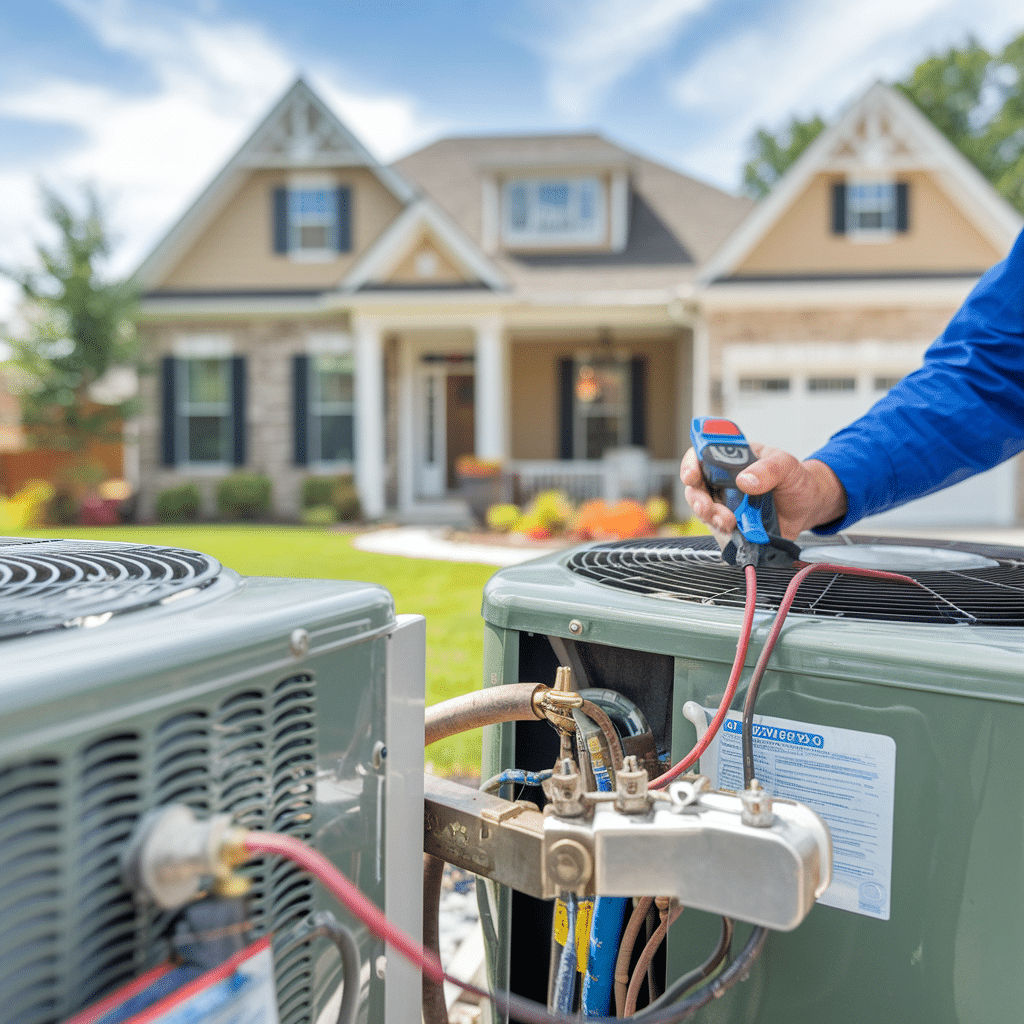
Unlike a simple filter change, refrigerant issues require professional intervention. Modern refrigerants like R-410A operate under high pressure and require specialized equipment to handle safely. Additionally, simply adding refrigerant without locating and repairing the leak wastes money and damages the environment. EPA regulations mandate that technicians must identify and fix leaks before recharging systems. Professional refrigerant leak detection and repair in West Hills typically ranges from $400-$1,500 depending on leak location and the amount of refrigerant needed. For homes with older systems still using R-22 (Freon), costs can be significantly higher due to the phase-out of this refrigerant.
Our team at ACE Appliance uses electronic leak detectors and UV dye to pinpoint even the smallest leaks in your system. We then repair the leak, evacuate any remaining refrigerant, and recharge to manufacturer specifications—ensuring your system operates at peak efficiency. For West Hills homeowners concerned about their investment, addressing refrigerant leaks quickly prevents compressor damage that could cost thousands more down the road.
Air Filter Neglect: The $15 Problem That Causes Expensive Damage
A clogged air filter represents the most common—and most preventable—cause of AC warm air problems. In West Hills’ dusty environment, particularly for homes near open spaces or construction areas around Bell Canyon Adjacent, air filters accumulate debris faster than in more urban areas. What should be a monthly or quarterly maintenance task often gets overlooked until the system begins showing symptoms.
When an air filter becomes severely clogged, it restricts airflow across the evaporator coil inside your air handler. This restricted airflow has cascading effects throughout your system. First, the reduced air volume means less heat gets absorbed from your home, resulting in weak or warm air from your vents. Second, the evaporator coil gets too cold without adequate air flowing across it, causing ice to form. Once ice builds up, airflow drops further, and your system may shut down completely or blow only warm air as the compressor cycles off.
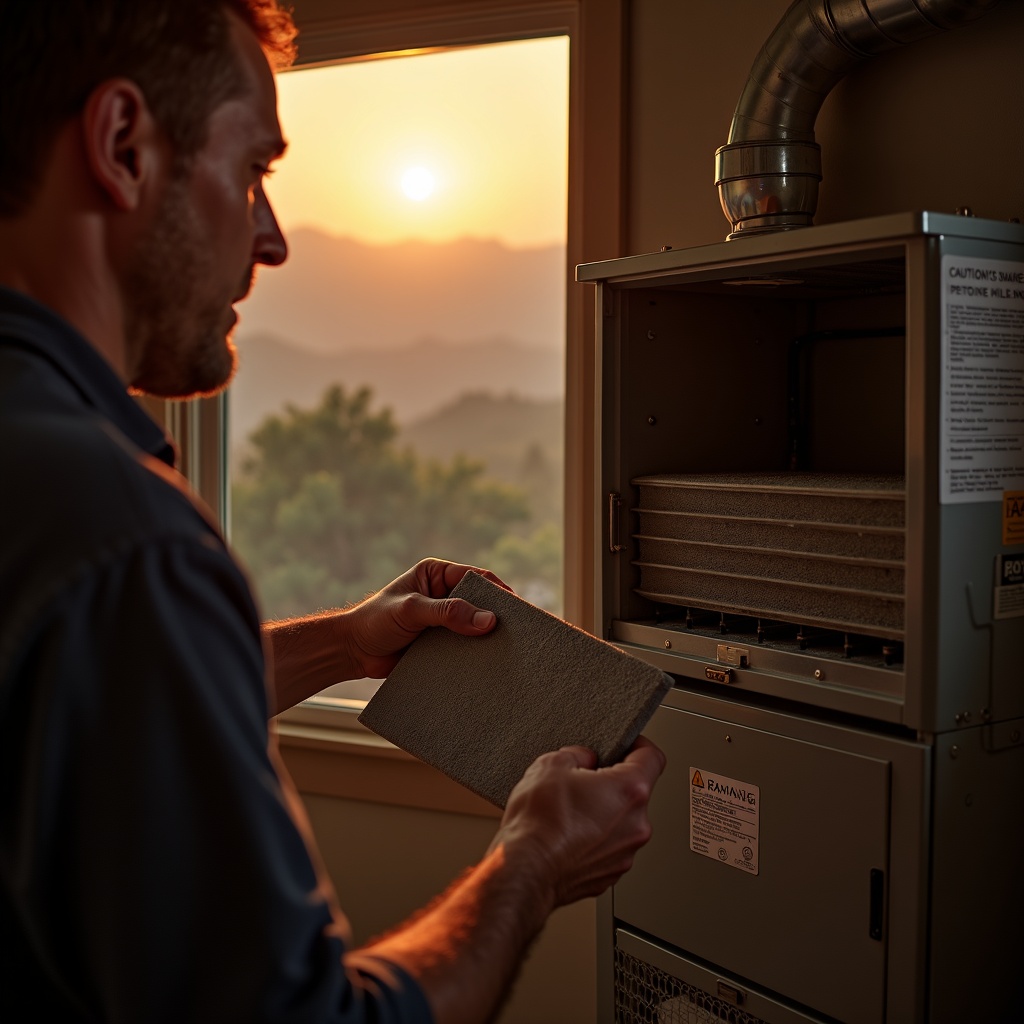
Checking your air filter is the first diagnostic step any West Hills homeowner should take when experiencing AC problems. Turn off your system, locate the filter (usually in a return air grille or inside the air handler), and inspect it. Hold it up to light—if you can’t see light passing through, it needs replacement. For homes with pets, smokers, or during particularly dusty periods in West Hills, filters may need monthly replacement rather than the standard 90-day interval.
The beauty of air filter maintenance is its simplicity and low cost. Quality filters cost $15-30 each, and replacement takes under five minutes. However, the consequences of neglect can be severe. Restricted airflow forces your system to work harder, increasing energy consumption by 15% or more. Extended operation with a clogged filter can cause the evaporator coil to freeze, potentially damaging the compressor—a repair that costs $1,500-4,500. For West Hills homeowners who’ve invested nearly a million dollars in their properties, a $20 filter represents the most cost-effective home maintenance you can perform.
Frozen Evaporator Coils: When Your AC Literally Shuts Down From Cold
It might seem counterintuitive, but your air conditioner can actually get too cold—specifically, the evaporator coil can freeze solid, completely blocking airflow and causing your system to blow warm air. This problem connects to several underlying causes, making it both common and complex in West Hills homes.
Evaporator coils freeze when the refrigerant inside them gets too cold, typically caused by insufficient airflow across the coil. A clogged air filter is the most frequent culprit, but blocked return vents, closed registers in too many rooms, or a failing blower motor can all reduce airflow to the point where freezing occurs. Low refrigerant levels can also cause coil freezing, as the reduced pressure allows the refrigerant to get abnormally cold. In West Hills’ summer heat, homeowners sometimes discover ice on their indoor unit or outdoor refrigerant lines—clear evidence that something has disrupted the normal cooling cycle.
If you suspect frozen coils, the immediate response is straightforward: turn off your AC system at the thermostat and switch the fan to “on” mode. This allows the fan to continue circulating air while the ice melts—a process that typically takes 2-8 hours depending on how much ice has accumulated. During West Hills summers, when outdoor temperatures remain high, some homeowners place towels around the indoor unit to catch condensation as ice melts. Never try to chip away ice or use heat to speed melting, as this risks damaging the delicate aluminum fins on the evaporator coil.
Once the ice has melted, you face a diagnostic question: why did freezing occur? If you haven’t changed your filter recently, start there. If the filter is clean and the problem recurs, you’re likely dealing with a refrigerant leak, a failing blower motor, or ductwork issues that require professional diagnosis. Our HVAC services in West Hills include thorough system inspections that identify the root cause of freezing rather than just addressing the symptom. The cost to resolve frozen coil issues ranges from $150 for a simple filter replacement to $1,500+ if refrigerant leaks or blower motor replacement is needed.
Thermostat and Electrical Failures: The Control System Breakdown
Your thermostat serves as the command center for your entire HVAC system, and when it malfunctions, even a perfectly functional AC unit will appear to fail. In West Hills homes—many of which feature sophisticated smart thermostats and zoned climate control systems—thermostat issues can present in surprisingly subtle ways that cause warm air problems.
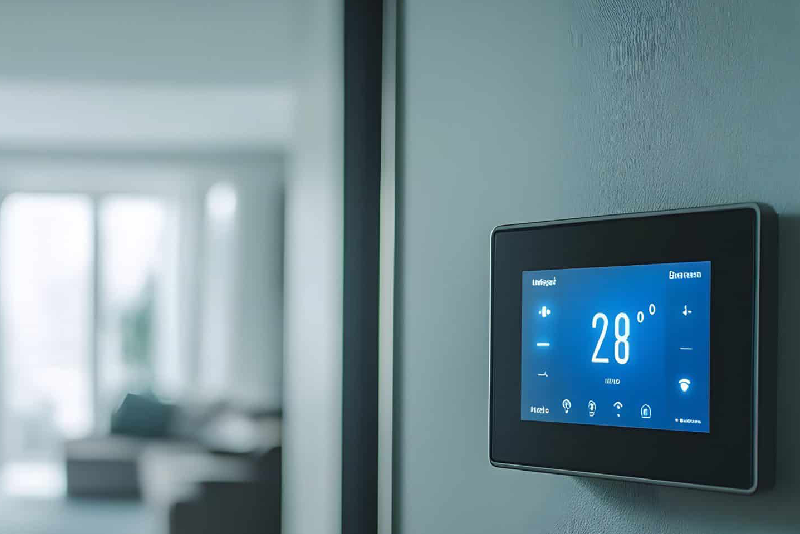
The most obvious thermostat problem is incorrect settings. It sounds simple, but after houseguests, children, or cleaning services adjust controls, your system may be set to “heat” instead of “cool,” or the fan may be set to “on” (which circulates air continuously without cooling) rather than “auto.” Before investigating complex issues, verify your thermostat shows “cool” mode, the set temperature is below current room temperature, and the fan is set to “auto.” For homes with programmable or smart thermostats, check that schedule settings haven’t created unexpected heating periods during summer.
Beyond user error, thermostats can develop technical failures that send incorrect signals to your AC system. Dead batteries cause many issues with battery-powered thermostats—if your display is blank or dim, replace batteries first. Dust and debris inside the thermostat can interfere with temperature sensors, causing inaccurate readings. In older West Hills homes with original thermostats, age-related wire corrosion or sensor drift can make your system think your home is cooler than it actually is, preventing the AC from running when needed.
Electrical issues extend beyond the thermostat itself. Tripped circuit breakers are surprisingly common after power surges or during peak demand periods in West Hills summers. Your AC system typically has two breakers—one for the indoor air handler and one for the outdoor condensing unit. If either trips, your system won’t cool properly. Check your electrical panel and reset any tripped breakers. If a breaker trips repeatedly, never simply reset it multiple times—this indicates a serious electrical problem that requires immediate professional attention to prevent fire hazards.
For West Hills homeowners considering upgrades, modern smart thermostats offer significant advantages including remote monitoring, maintenance reminders, and energy usage tracking. Professional thermostat installation and programming costs $200-500 but can reduce cooling costs by 10-15% through optimized operation. When electrical problems prove more serious—involving capacitors, contactors, or wiring issues—repair costs typically range from $150-600 depending on the specific component and labor required.
Compressor and Outdoor Unit Problems: The Heart of Your AC System
The compressor represents your AC system’s most expensive and critical component—essentially the heart that pumps refrigerant through the cooling cycle. When compressors fail or outdoor unit components malfunction, warm air is often the first symptom West Hills homeowners notice. Understanding these issues helps you respond appropriately and avoid catastrophic system failures.
Compressor problems manifest in several ways. A failing compressor may run briefly then shut down, producing clicking or rattling sounds as it attempts to start. You might notice the outdoor unit fan spinning while the compressor remains silent—a clear sign of compressor failure. In some cases, a defective start capacitor or contactor prevents the compressor from engaging at all, leaving your system blowing only fan air without any cooling. West Hills’ extreme summer heat places tremendous strain on compressors, particularly in systems that run 10+ hours daily during peak season.
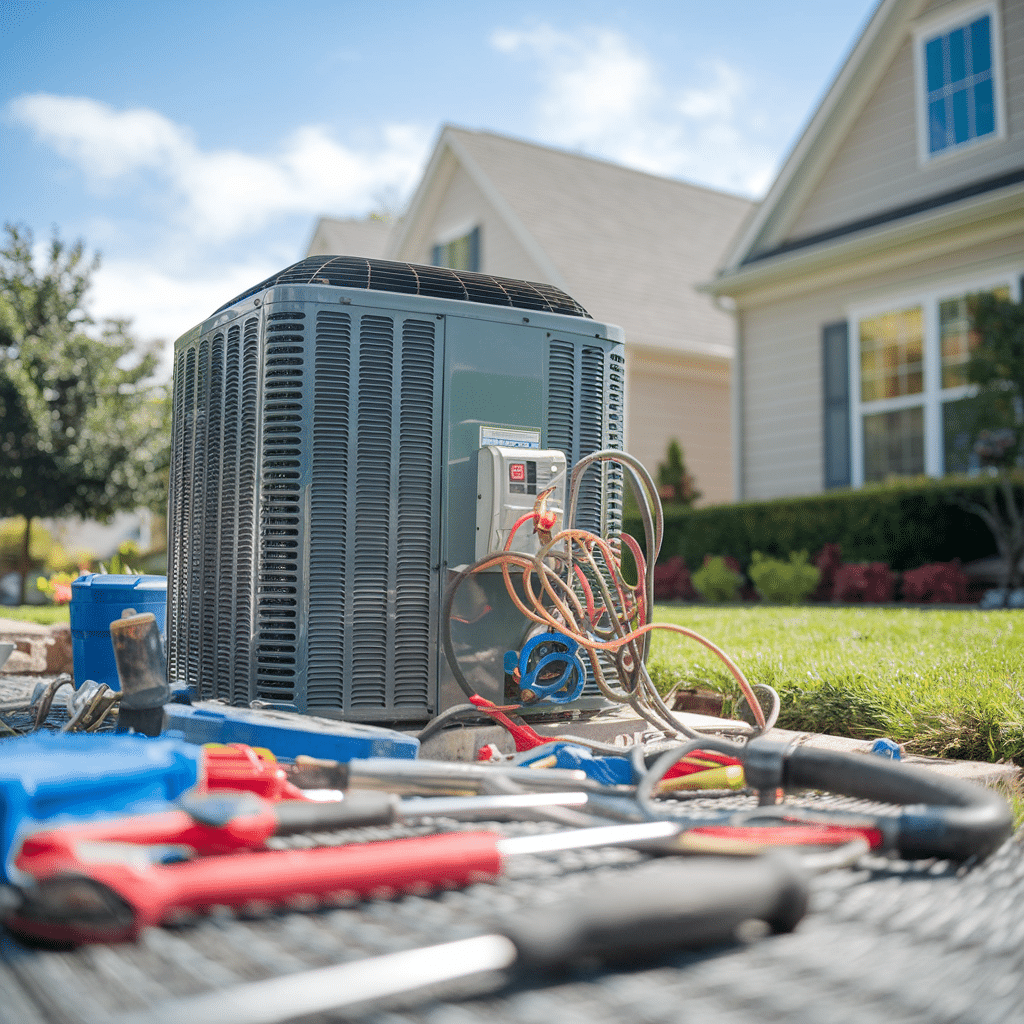
The outdoor condensing unit contains several components beyond the compressor that can cause warm air problems. The condenser fan must spin freely to dissipate heat from the refrigerant—if it fails, your system’s efficiency drops dramatically. The condenser coils themselves must remain clean to transfer heat effectively, but in West Hills’ dusty environment near areas like Orcutt Ranch Horticultural Center, these coils accumulate dirt, grass clippings, and cottonwood seeds that insulate rather than dissipate heat. When the outdoor unit can’t reject heat properly, your indoor air won’t get cold.
Diagnosing outdoor unit issues requires careful observation. Go outside while your AC runs and watch the outdoor unit. The fan should spin steadily, you should hear the compressor humming (not clicking or rattling), and you should feel warm air blowing from the unit as it rejects heat. If the unit is silent, check the breaker and disconnect switch. If the fan spins but you feel no warm air or hear no compressor sound, professional diagnosis is needed. Never remove the outdoor unit’s panel yourself—high voltage and refrigerant make DIY repairs dangerous.
Compressor replacement represents one of the most expensive AC repairs, typically costing $1,800-4,500 depending on system size and refrigerant type. For West Hills homeowners with systems over 12 years old, compressor failure often signals that complete system replacement makes more financial sense than repair. Our team at ACE Appliance provides honest assessments of whether repair or replacement better serves your long-term interests. When we can save your compressor through capacitor replacement ($150-400) or professional cleaning and maintenance, we’ll recommend those more affordable options first.
How West Hills Climate and Home Characteristics Accelerate AC Problems
West Hills presents unique environmental conditions that affect how quickly AC problems develop and how severely they impact system performance. Understanding these local factors helps homeowners implement preventive measures that extend system life and prevent emergency failures during the hottest months.
Our climate combines high temperatures with low humidity and significant dust—a challenging combination for air conditioning systems. Summer temperatures regularly exceed 95°F, with occasional heat waves pushing past 105°F. These extreme temperatures force AC systems to run longer hours, placing stress on compressors, motors, and electrical components. Systems that might run 4-6 hours daily in moderate climates often operate 10-14 hours during West Hills summers, dramatically accelerating wear on all moving parts.
Dust and airborne particles present another challenge, particularly for homes in areas like Shadow Ranch Park or near open spaces. West Hills’ position in the western San Fernando Valley means we experience Santa Ana winds that carry fine dust particles that infiltrate outdoor condensing units and indoor air handlers. This dust accumulates on condenser coils, reducing heat transfer efficiency by up to 30%. It clogs air filters faster than in urban areas, and it can even damage blower motors if it infiltrates the air handler cabinet. Regular maintenance and more frequent filter changes become essential rather than optional in our environment.
The architectural characteristics of West Hills homes also influence AC performance. Many properties in neighborhoods like Valley Circle and Stonegate Estates feature larger floor plans—often 2,500-4,000 square feet—that require more powerful HVAC systems and more complex ductwork. Larger homes mean longer duct runs, creating more opportunities for air leaks that waste cooled air. Homes with second stories face the added challenge of heat stratification, where upper levels can be 10-15 degrees warmer than lower levels, forcing systems to work harder to maintain comfort throughout the home.
For West Hills homeowners, these factors underscore the importance of preventive maintenance. Annual professional service—including coil cleaning, refrigerant pressure checks, and electrical component inspection—costs $95-200 but prevents problems that could cost thousands to repair. Our affordable AC maintenance program provides comprehensive annual service that addresses the specific challenges our local environment presents. Between professional visits, homeowners should check filters monthly, keep vegetation trimmed at least two feet from outdoor units, and monitor system performance for early warning signs of developing problems.
Prevention Strategies and When to Call ACE Appliance
Preventing warm air problems costs far less than repairing them after they occur. For West Hills homeowners who’ve invested nearly a million dollars in their properties, protecting that investment through strategic HVAC maintenance makes both financial and practical sense. A systematic approach to prevention can extend your AC system’s lifespan from the typical 12-15 years to 18-20 years while reducing energy costs and maintaining home comfort.
Start with a monthly inspection routine that takes less than 15 minutes. Check and replace air filters as needed—during peak summer in West Hills, this may mean monthly replacement rather than quarterly. Walk outside and visually inspect your condensing unit, removing any leaves, grass clippings, or debris that have accumulated. Ensure all supply vents throughout your home remain open and unblocked by furniture or curtains. Listen for unusual sounds when your system runs—grinding, squealing, or clicking noises indicate developing problems that are easier to fix when caught early.
Schedule professional maintenance annually, ideally in spring before cooling season begins. Professional service includes tasks homeowners cannot safely or effectively perform themselves: checking refrigerant pressures, measuring electrical draw on motors, cleaning evaporator and condenser coils, lubricating bearings, and testing capacitors and contactors. These services identify small problems before they become expensive failures. For example, replacing a failing capacitor costs $150-400, but if that capacitor fails completely, it can damage your compressor—turning a $250 repair into a $3,000 catastrophe.
Knowing when DIY troubleshooting ends and professional service begins protects both your safety and your system. You can safely check filters, reset breakers, verify thermostat settings, and clean debris from your outdoor unit. However, you should call ACE Appliance at (818) 939-4882 when you encounter refrigerant leaks, electrical problems beyond simple breaker resets, frozen coils that recur after addressing obvious causes, compressor issues, or any problem involving specialized tools or refrigerant handling. Attempting DIY repairs on these systems risks electrical shock, refrigerant exposure, or equipment damage that voids warranties and increases repair costs.
For West Hills residents experiencing AC warm air problems, our response times and local expertise make the difference between a comfortable home and days of suffering through summer heat. We stock parts for all major brands including Carrier, Trane, Lennox, Rheem, and Goodman, allowing us to complete most repairs in a single visit. Our technicians live and work in the West Hills area, understanding the specific challenges our climate presents and how local home construction affects HVAC performance. We also service neighboring Woodland Hills and Chatsworth communities with the same commitment to quality and customer service.
When you call ACE Appliance for warm air problems, we begin with comprehensive diagnosis rather than parts replacement. Many companies recommend expensive repairs before identifying actual causes—we believe in showing you exactly what’s wrong, explaining your options, and providing upfront pricing before any work begins. For West Hills homeowners who value transparency and quality work, this approach ensures you make informed decisions about your home’s comfort systems. Our goal isn’t just fixing today’s problem—it’s ensuring your HVAC system provides reliable, efficient performance for years to come, protecting both your comfort and your substantial investment in your West Hills home.
Get Your Free Quote Today